
# Azad Sağnıç's "İnkâr" Novel Meets Readers in Istanbul Tomorrow
**Azad Sağnıç's novel *İnkâr: Dark Years, Bright Traces*, which recounts the September 12 prison experiences and the period after imprisonment, will be presented to readers in a launch event and discussion at the Kıraathane Istanbul Literature House in Beyoğlu on Saturday, October 17.**
A launch and discussion program is being organized for author Azad Sağnıç's new novel İnkâr: Dark Years, Bright Traces. The event will take place on Saturday, October 17, 2026 at 15:00 at the Kıraathane Istanbul Literature House, located at 1 Yemenici Abdüllatif Street, Asmalı Mescit neighbourhood, Beyoğlu.
The novel tells the story of its protagonist, İbrahim Gürbüz, who spent four and a half years in prison after the September 12, 1980 coup and the difficult years that followed his release. Sağnıç situates İbrahim’s narrative within the chronology of the centuries‑long migration, exile and denial policies experienced by Kurds, particularly those from the Kaskan region.
Leyla Mihrinaz Engin, who served as the book’s editor and wrote its foreword, notes that the novel places at its core the torture, humiliation and the killing of some comrades during interrogation endured by İbrahim and other political detainees, especially Kurdish prisoners. According to Engin, these passages evoke in the reader the sense that the author himself went through the same ordeals, and that impression is justified. Engin writes:
"When the protagonist Ibrahim faces torture and you think he will break, end, go mad, or die, he instead gets up again and resists – a moment that shakes the reader."
One of the scenes highlighted in the foreword shows Ibrahim, awaiting the death penalty, reading in his solitary cell an old newspaper that reports the founding of the Paris Kurdish Institute. The institute, established through the initiative of Kurdish intellectuals such as Kendal Nezan, Yılmaz Güney, Cegerxwîn and others, makes Ibrahim promise himself: if he survives the prison, he will work institutionally for the Kurdish language, literature, history and art.
In the novel, after his release Ibrahim takes part in the founding of the Mesopotamia Culture Center, the Kurdish Institute, Yaşam Radio and the İsmail Beşikçi Foundation, despite death threats, conspiracies and assassination attempts. The state's pressure, however, leaves most of its other schemes unfinished.
Engin also writes that the wise woman character Serayê takes the reader’s breath away within the tense, advancing narrative. According to the foreword, the novel tells, beyond an individual’s life story, the wounds inflicted on a nation’s memory by wars, forced migrations, assimilation policies and poverty; it details the alienation and solidarity of a family uprooted from its roots along migration routes. Engin recalls Mir Celadet Bedirxan’s saying “Welat bi xebata mirovên xwenda xelas dibe” and says readers will see the truth of this statement within the pages of the novel.
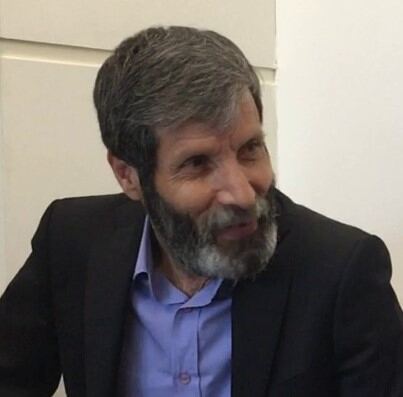
Who is Azad Sağnıç?
Azad Sağnıç was born on 15 October 1960 in the Tetwan district of Bidlîs, as the fifth child of a family with six children, together with his twin brother Ferhat. He completed his primary, secondary and high‑school education in Tetwan. He is the son of Kurdish linguist and writer Feqî Huseyîn Sağnıç and Rabia Sağnıç‑Anecan, one of the well‑known faces of the “Saturday Mothers”. He has two sons, Zana and Peşeng.
Sağnıç was detained and arrested more than twenty times before the September 12, 1980 coup; for a period his political activity intersected with the Rizgari movement. After the coup he was arrested together with his father and his brothers Nevzat and Ferhat, endured brutal interrogations involving severe torture; the family spent time in prisons in Kars, Erzurum, Muş, Tunceli, Istanbul and Diyarbakır. In the 1983 Rizgari operation he was taken into custody again with his brothers and remained imprisoned for more than six months in Istanbul’s Sultanahmet Prison. In the following years he served for twelve years in HAK‑PAR as a member of the Party Council, a member of the Central Executive Board and as Deputy Chairman.
The author's books sit between research and fiction. Bana Beyaz Bir At Getirin (Nota Bene, 2016) tells the story of the Turkish left’s organization in Kurdistan between 1975 and 1984 through the lives of Dev-Yol and Orhan Keskin. Ama Onlar Kardeştiler (Nota Bene, 2020) is a historical novel that follows the reunion, fifty years later, of two sisters who lost each other during the First World War. 30 Gün (Doz, 2024) deals with the crossing of paths between a torturer and a tortured person in a psychiatric clinic. İz Bırakanlar (Doz, 2024) records the lives of 35 Kurdish intellectuals and patriots who lived in or passed through Tetwan between 1870 and 1942, drawing also on the author's father's archives. Yarım Kalan Sesler ve Saat 03:59 (Erda, 2026) is a novel that narrates the period before and after the September 12 coup through the life of a Kurdish revolutionary. İnkâr continues this line of work.
Program bilgisi
- Event: İnkâr: Dark Years, Bright Traces presentation and interview
- Date: October 17, 2026, Saturday
- Time: 15:00
- Venue: Kıraathane Istanbul Literature House, Asmalı Mescit Neighborhood, Yemenici Abdüllatif Street No: 1, Beyoğlu, Istanbul
Report: Hüsamettin Turan