
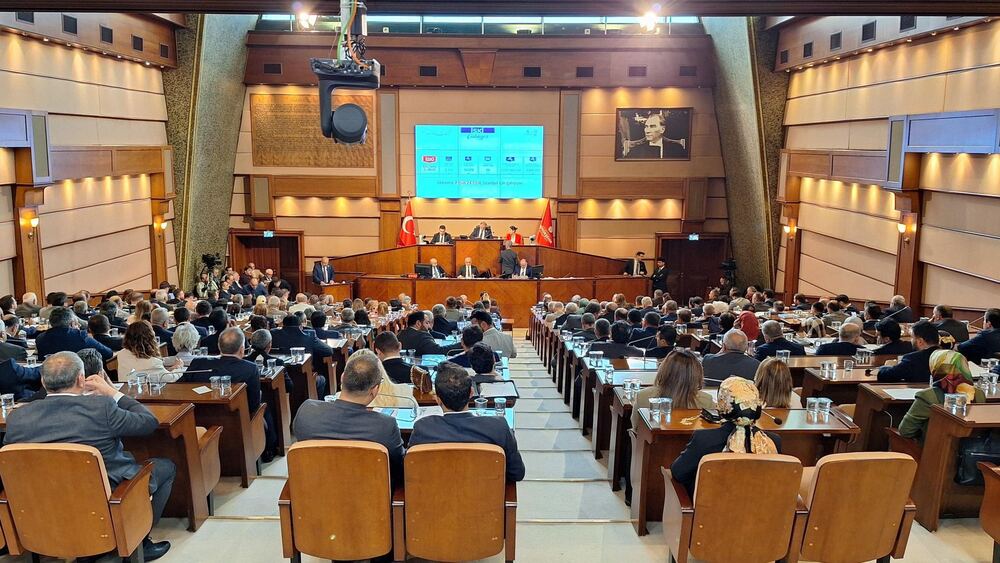
Election Procedures for Mayors and Deputy Mayors Changed in Municipal Councils
New measures such as ballot papers, preference stamps, and transparent ballot boxes have been introduced in municipal councils when the mayor's office becomes vacant.
A amendment to the Municipal Council Working Regulation, prepared by the Ministry of Environment, Urbanization and Climate Change, was published in the Official Gazette, changing the procedures for elections to be held in the council when the mayor’s or deputy mayor’s position becomes vacant.
According to the regulation, a vacant post must be scheduled for election within ten days by a decision of the provincial governor. Council members who wish to run and party groups that wish to nominate candidates must submit their candidacy to the council’s mayoral board during the first session of the first meeting of the voting session; no new applications are accepted after that session, although candidates may withdraw before any subsequent session.
A single combined ballot paper will be used in the elections; the reverse side of the ballots will be stamped by the mayoral board. Council members will press the preference stamp in the designated field, fold the ballot, place it in an envelope without any identifying mark, and drop it into a transparent ballot box. To ensure vote secrecy, at least two closed voting booths will be set up, and the ballot box will be positioned in a publicly visible area.
Ballots that lack the mayoral seal, have an identifying mark placed on them, or bear more than one preference stamp will be deemed invalid. Ballots with printing errors, stains or creases will still be considered valid. If more sealed envelopes are retrieved from the box than the number of members who voted, the election will be repeated; unsealed envelopes will be stored separately to be destroyed without being opened.
Source: Kurdistan24