
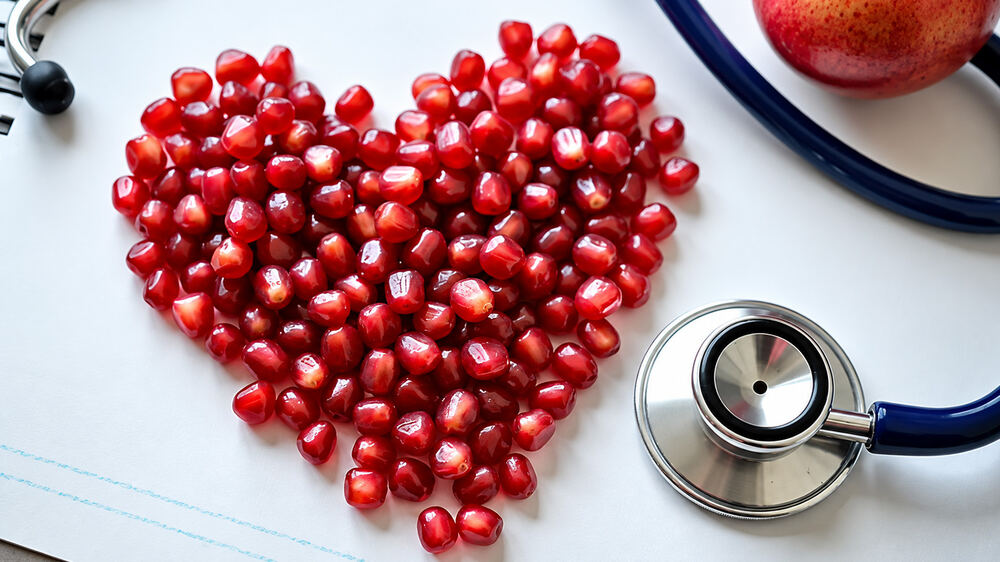
Pomegranate Compound Urolithin A Improves Heart Function by 80%
Researchers at King's College London reported that Urolithin A, formed after consuming pomegranate, achieved up to an 80% improvement in heart‑failure treatment in mice and laboratory‑grown human heart tissue.
Researchers at King's College London have shown that a natural compound called Urolithin A, produced by gut bacteria after pomegranate consumption, yields promising results in treating heart failure. The study, conducted with support from the British Heart Foundation, was published in Science Advances and carried out on mice and human heart tissue cultivated in the laboratory.
Urolithin A activated the PKGIα protein that promotes cardiac relaxation, reducing the stiffness of heart tissue and lowering internal pressure. Treated mice exhibited up to an 80% improvement in heart function compared with untreated controls; human heart tissue in the lab also contracted and relaxed more rapidly.
Study lead Joseph Burgoyne said the findings open the door to the development of next‑generation drugs, but cautioned that they are not sufficient to issue a direct “eat pomegranate” recommendation. British Heart Foundation research director James Leiper added that the benefits have only been demonstrated in animals and laboratory tissues, and that clinical trials are required to confirm the effect in humans.
Source: Kurdistan24