
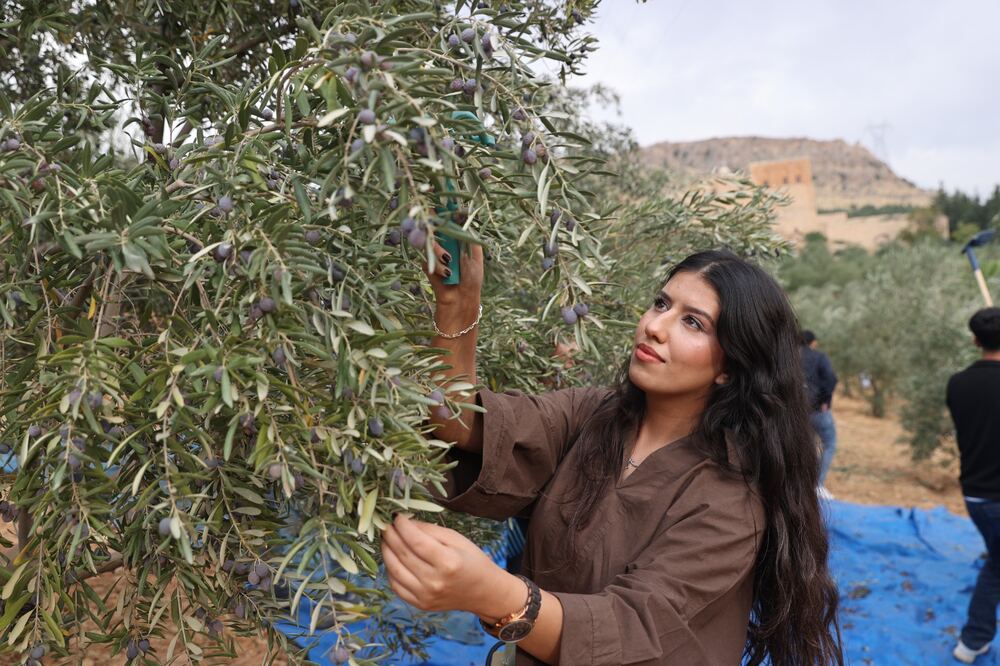
Olive Harvest and Yield Increase at Deyrulzafaran Monastery
In the historic garden of the Deyrulzafaran Monastery in Mardin, this year saw higher variety, yield and quality of olives.
Located 4 kilometres from Mardin’s city centre, the Deyrulzafaran Monastery dates back to the 5th century, with later additions bringing it to its present form in the 18th century. The harvest of olives grown in the monastery’s roughly 400‑acre garden began this year.
Professional cultivation has been carried out in the garden for about 20 years, and local southeastern varieties such as “halhal”, “mavi”, “zoncuk”, “melkabazi” and “belloti” have shown improvements in quality and yield. Established in 2006 and now hosting around 15,000 trees, the orchard yields an average of 15‑20 kg per tree, with some local varieties reaching up to 20 kg.
Yılmaz Hiçbezmez, Vice‑President of the Mardin Syriac Ancient Deyrulzafaran Monastery and Churches Foundation, said that this year they expect higher‑quality produce and a better yield than the previous year. He noted that early buyers are numerous, the harvest is completed within two to three months, and new olive trees are planted each year.
Dr. İshak Bayyiğit, board member of the Monastery Maintenance, Restoration and Revitalisation Association and a faculty member at MAU’s Kızıltepe Faculty of Agriculture Sciences and Technologies, said the garden holds an important position in olive cultivation across Mardin and that students take part in the harvest as part of practical coursework.
The harvested olives are consumed as table green and black olives, and are also used for olive‑oil production during both the early and late harvest periods.
Source: Kurdistan24