
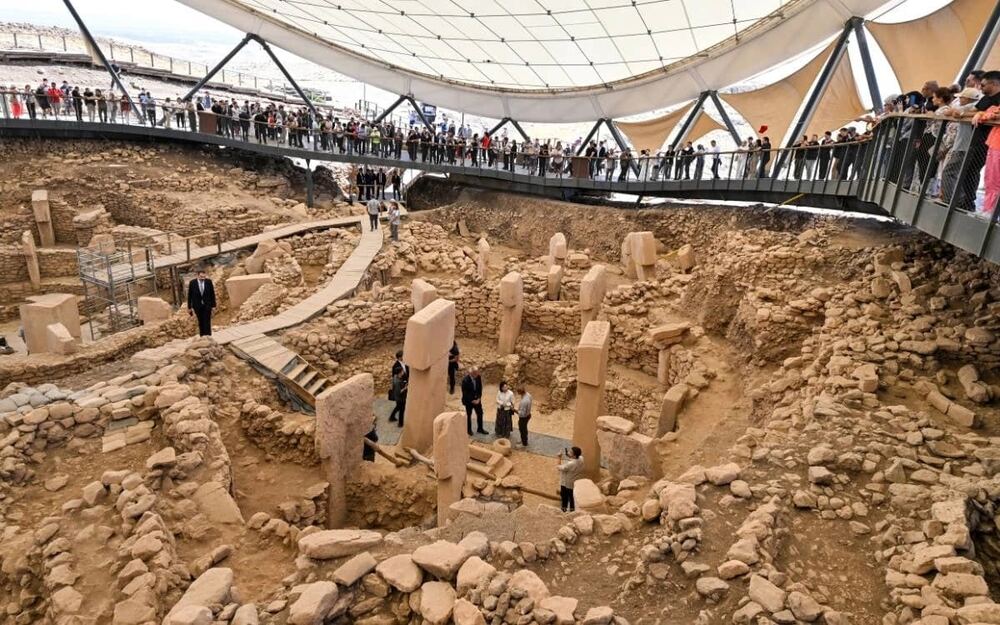
Two new 10,000‑year‑old graves discovered at Göbeklitepe
Researchers from the German Archaeological Institute found two human graves dating to 8700‑8000 BCE at Göbeklitepe.
Göbeklitepe, one of the world’s oldest monumental complexes (known locally as Girê Miraza), has yielded, for the first time since excavations began in 1995, human graves that remain largely intact. According to a study by researchers from the German Archaeological Institute published in PLOS ONE, two graves dated to roughly 10,000 years ago were identified.
The first grave consists of a kidney‑shaped pit containing a collective burial; the skeletons of an adult woman, a young man and an adolescent girl were found there. In the second grave, the skeleton of a young woman, estimated to be between 20 and 30 years old, was discovered lying on her side with her legs drawn up toward her torso.
Previously, human bones found at Göbeklitepe had been scattered and were usually detected in the fill layers of the large structures. The new graves have revived two main hypotheses about the origin of those bones in the area: ritual relocation and erosion‑driven downhill movement. The researchers note that the new evidence fits better with the second explanation, though they do not completely rule out ritual use.
The bones in the graves are heavily fragmented, bear calcium deposits and rodent marks; these characteristics resemble the previously scattered bones and strengthen the view that Göbeklitepe was not only a ceremonial centre but may have been a long‑term settlement.
Source: Rûdaw