
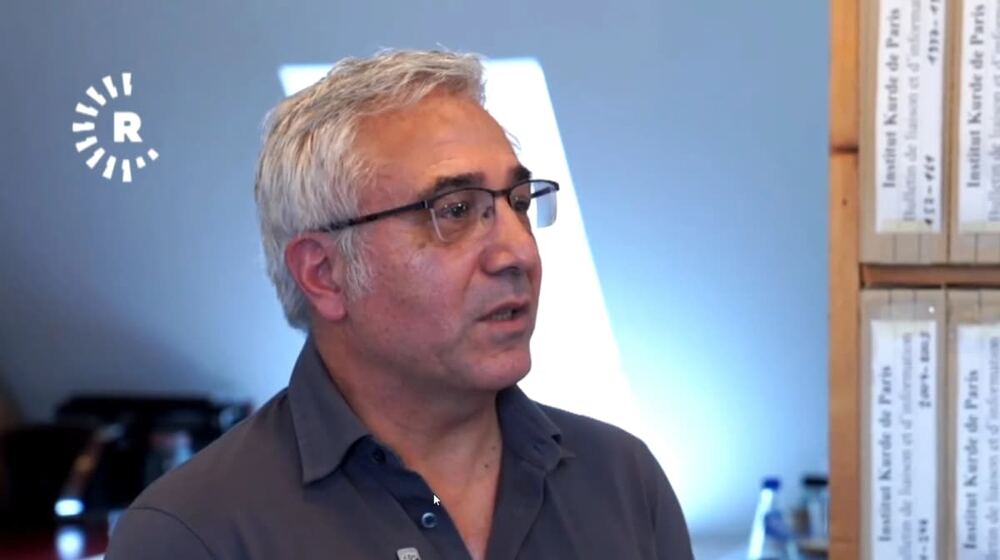
Germany's Political System Undergoing Fundamental Change, Haco Warns
Siyamend Haco, Director of the European Kurdish Research Center, said that the power of traditional parties in Germany is weakening and voters are turning to new opposition movements.
Siyamend Haco, Director of the European Kurdish Research Center, said that Germany's political system is undergoing a profound transformation and that voters are moving away from traditional parties toward new opposition movements. He emphasized that the classic structures that have held power since World War II, such as the SPD and CDU, are becoming stagnant and that governmental dominance is gradually weakening.
Economic fluctuations and the refugee issue were noted as directly influencing voter behavior. After the massive migration wave of 2015, some segments linked economic decline to immigrants, a perception that paved the way for far‑right and populist parties such as the AfD to gain strength.
In major cities, young people and voters under 40 were observed to vote for the Left Party (Die Linke) and the Greens, while in smaller towns and suburbs the votes shifted toward the AfD. This trend was described as a concrete reflection of deep resentment against the traditional governing parties.
Berlin is regarded as one of the most influential hubs for Kurds across Europe politically and intellectually, due to its geopolitical position and sizable Kurdish population.
Source: Rûdaw