
Head of Exeter’s Centre for Kurdish Studies: Closure rumours are false
Historical memory is being preserved in this library
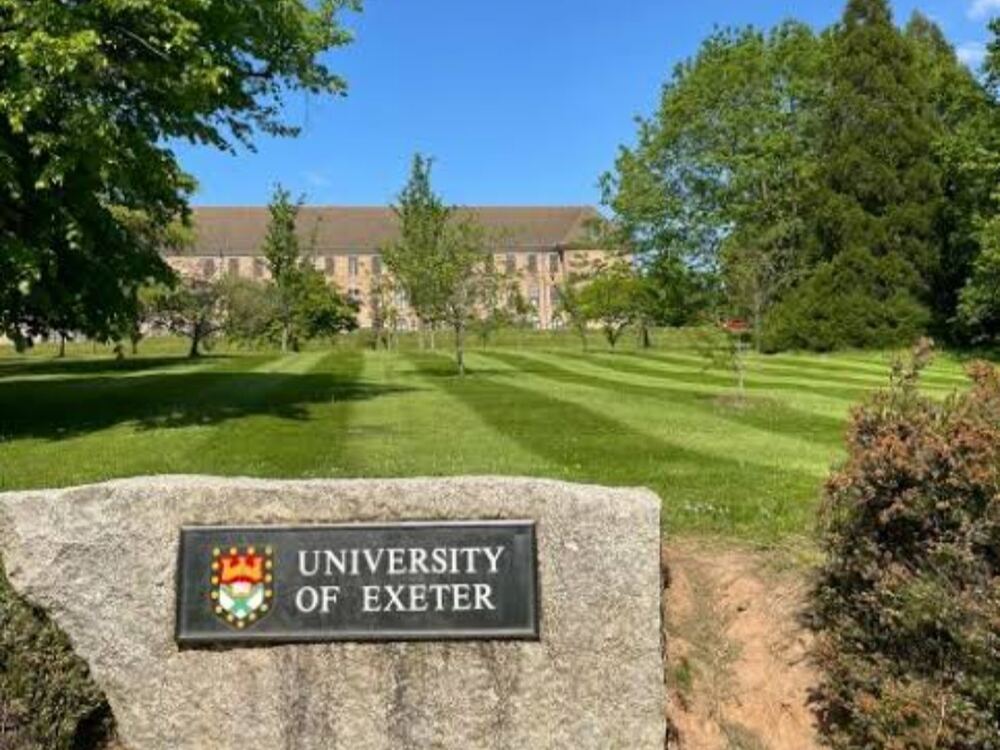
Erbil (Rudaw) – The head of the Exeter University Centre for Kurdish Studies in Britain, Dr. Ferengiz Qadiri, addressed rumours of the centre’s closure and said the centre is not being shut down.
There had been rumours that the Exeter Centre for Kurdish Studies would be closed due to budget cuts.
Dr. Ferengiz Qadiri told Rudaw that a reorganisation is being undertaken across the university and that the closure rumours have no basis.
She indicated that the centre will continue its work and has requested continued institutional support.
After the budget crisis affecting higher education across the UK, the future of the Exeter Centre for Kurdish Studies (Centre for Kurdish Studies) became a topic of debate.
The centre is the only academic institution in Britain that offers accredited Kurdish studies.
Centre director Dr. Ferengiz Qadiri answered questions from Rudaw’s International Affairs Editor Niyaz Mustafa.
She dismissed the public doubts and emphasized that the centre remains open and its activities will continue.
There is no closure; the restructuring involves the whole faculty.
Ferengîz Qadiriyê pointed out that the process of re‑establishing the administration is not limited to the Kurdish Studies Centre.
She noted that universities in Britain are undergoing a general financial crisis.
Ferengîz Qadiriyê said that the Faculty of Humanities, Arts and Social Sciences, to which the centre belongs, is drawing up a plan to reduce staff cuts.
She added that the circulated news has created a misleading perception in the public sphere.
Twenty‑year academic legacy: more than 25 PhD graduates.
The Exeter Kurdish Studies Centre was founded in 2006 under the patronage of the then Prime Minister of the Kurdistan Region, Nechirvan Barzani, and with financial support from the Ibrahim Ahmed Foundation.
The centre, which operates under the Institute of Arab and Islamic Studies, is the only university in Britain that offers an official degree in Kurdish studies.
Across Europe, it is also recognised as the most prestigious academic institution in this field, offering both undergraduate and doctoral programmes.
Since its inception, the centre has awarded more than 25 doctoral degrees and hosts researchers from around the world.
The course “History and Politics of the Kurds” offered at the centre attracts students interested in international relations, history and Middle Eastern studies.
Historical memory is preserved in this library.
Beyond its educational activities, the centre maintains a very important archive.
It houses special collections named after individuals such as Chris Kutschera and Omer Şêxmûs.
It also runs the “Kurdish Digital Archive” project, which digitises historical and literary Kurdish documents to preserve them from loss.
“Kurds are not only a political figure, they are also actors of science and culture.”
Qadiriyê pointed out that the presence of Kurdish studies in European academia is a living reality and said:
“This centre rescues Kurdish historical and cultural works from the narratives of dominant states and brings them into an independent scientific research centre.”
They reiterate that the Kurdish community is not merely a figure that is recalled in the context of war and politics; it is a nation that contributes to literature, history, and the world of thought.
Banga piştgiriyê ji bo berdewambûnê
Ferengiz Qadiriyê recalled that Kurdish studies are an independent field and that lacking state support makes it difficult to secure large funding.
She indicated that protecting this academic department requires long‑term financial resources.
Qadiriyê appealed to the Kurdistan Regional Government, philanthropic actors and civil‑society foundations, stating that scholarships for students and research funds could guarantee the centre’s future.