
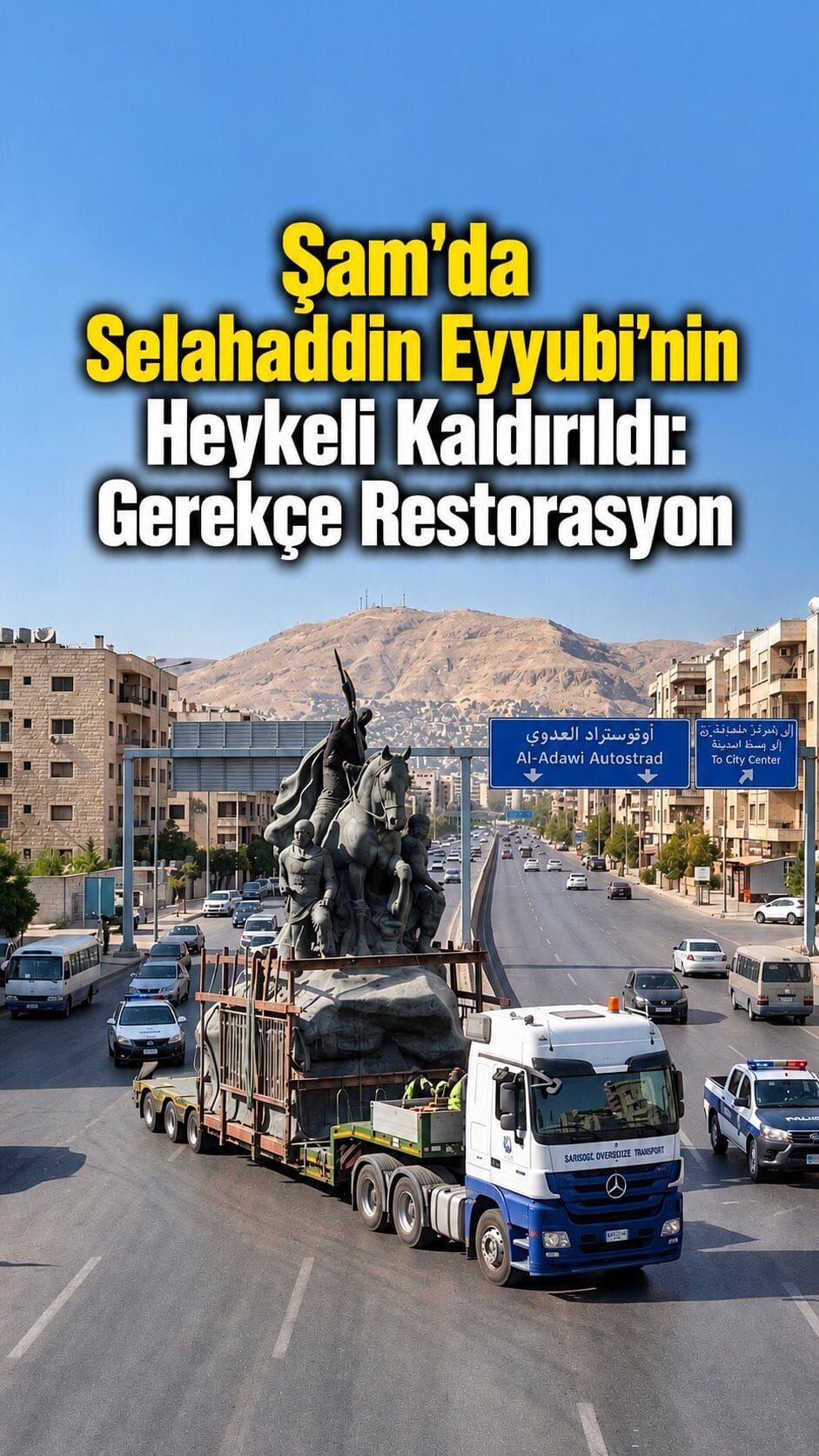
Statue of Saladin Ayubi Removed
First its crown was removed, now the statue entirely…
Statue of Saladin Removed: Kurdish Historical Heritage Becomes Subject of Debate
The statue of Saladin, whose crown had been removed and whose surrounding cloth was torn, had become a focal point, and now it has been taken down from its location. This act, carried out under the pretext of restoration, has revived debates about the proximity of the HTS leadership to the Kurds and the protection of historical heritage.
Damascus – The removal of the statue of the Kurdish ruler Saladin, which stood in front of the Damascus Citadel, has sparked discontent. After the incident in which the crown was removed and the surrounding cloth was torn, this development has reopened discussion about the new leadership’s proximity to historical and cultural symbols.
First the crown was removed, now the statue has been taken down
The initial removal of the crown triggered widespread public criticism. The removal of the crown and the tearing of the surrounding cloth were seen as an affront to the historical figure and the heritage he represents.
The removal of the statue from its original site raised questions about whether this incident is an isolated event or part of a broader trend.
The authenticity of the restoration is being debated.
Although the removal of the portrait is justified as a restoration measure, some critics do not view it as merely that. Critics argue that caution is needed regarding the fate of a historic figure such as Salah al-Din and where the portrait will be displayed again.
The arguments raised in the broader Kurdish discourse show that the issue is not only about relocating the portrait. At the heart of the debate is how Kurdish identity and historical heritage are represented in the wider Syrian context.
The proximity of the HTS leadership is being questioned.
The new administration under HTS leadership is also being discussed in terms of its stance toward Kurdish cultural and historical values. The removal of the portrait’s frame, and subsequently its complete removal, is interpreted by some as a sign of a policy that pushes Kurdish identity and historical symbols to the background.
Critics say that the restoration narrative diverts attention from political motives. However, it has not been definitively proven that the portrait’s removal directly stems from an anti‑Kurdish policy.
The Historical Legacy of Salah al-Din
Saladin, who lived between 1138 and 1193, was a Kurdish ruler and commander and the founder of the Ayyubid dynasty. After Jerusalem was recaptured from the Crusaders in 1187, he became an important figure in Kurdish and Middle Eastern history.
The removal of the statue in Damascus revived debates about protecting historical heritage and representing the identities of various peoples in the public domain.
Although no announcement has been made about when and where the statue will be displayed again, this development raises questions about the proximity of the HTS leadership to Kurdish identity and the use of living historical symbols.