
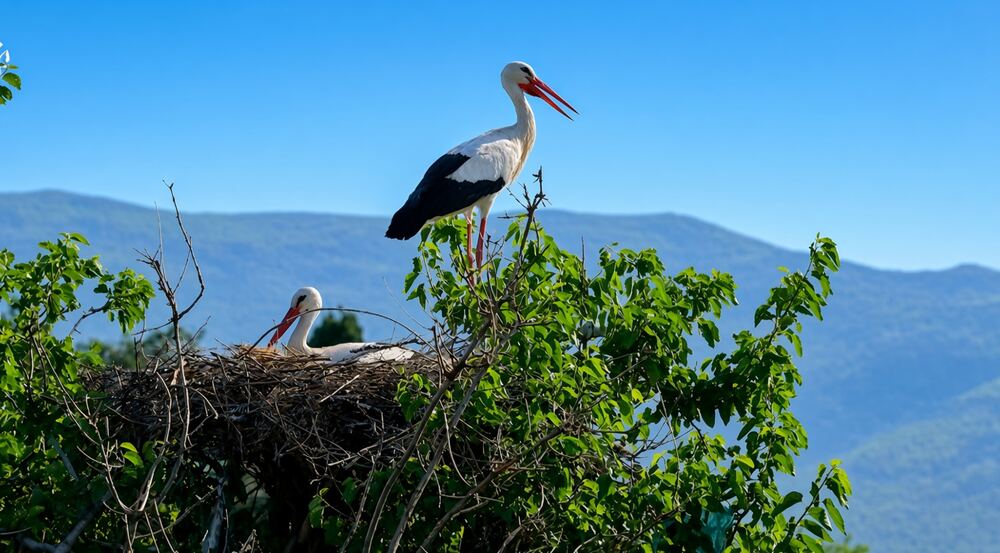
Climate change delays stork migration in Kanimaran
In the village of Kanimaran, climate change has caused storks to postpone their traditional migration time and remain in the village.
In the village of Kanimaran, the migration behavior of storks changed this year due to the effects of climate change. The storks, which normally return to the area in early February and migrate to warmer regions in mid‑August, have continued to stay near water sources even as autumn approaches.
Village resident and farmer Bryar Sabir said, “What happened this year is quite extraordinary. The storks left their nests and gathered on the poles in a common area, standing as if waiting for something to happen. I have been observing these birds in our fields and gardens for a long time, but this is the first time I have encountered such a phenomenon.”
Villagers note that the storks do not damage agricultural activities; on the contrary, they contribute to the ecosystem. Saadi Ahmed remarked, “Our elders used to tell us that these storks have always been here. The region’s climatic advantages and the community’s sensitivity reinforce this situation. Even though they come onto our farmland, they cause no harm.”
The villagers protect the storks and also take responsibility for treating birds that are injured or have lost the ability to fly. The continued presence of the migratory stork in the area is generally regarded as a sign of safety and peace.
Source: Kurdistan24