
If İmamoğlu’s Forming an Organization Is a Crime, Why Isn’t Öcalan’s Founding of the KCK a Crime?
The contradiction between the criminal‑organization accusations against İmamoğlu and Öcalan’s description of the KCK’s founding, in light of his meetings with the MIT, raises the question of whether the state applies the law according to political interests.
Who Founded the KCK? Questions the Turkish State Must Answer
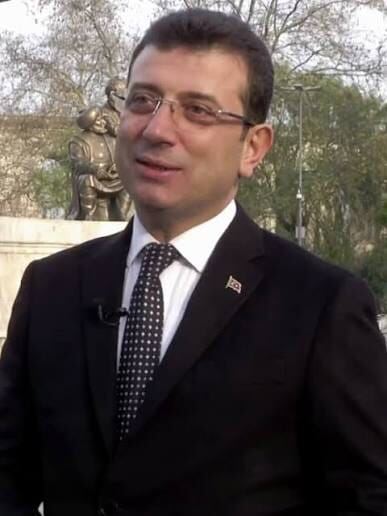
Look at the striking contradiction between the Turkish state’s approach to Ekrem İmamoğlu and Abdullah Öcalan. İmamoğlu, a leading figure of the party that founded the Republic of Turkey – the CHP – and the elected mayor of Istanbul, is being tried in custody on various charges, including establishing and managing an organization for the purpose of committing crimes. Moreover, even the statements he made in his defence at trial are being turned into a new investigation. In contrast, Abdullah Öcalan, who has been held in prison under heavy security conditions since 1999 and was initially sentenced to death, explicitly states in his own accounts that he discussed the founding of the KCK with Turkish intelligence. How can a state prosecute an elected opposition politician for founding an organization while its intelligence agency can discuss the creation of a cross‑border political organization with the imprisoned leader of an armed movement?
This is not a claim put forward by those opposed to Öcalan. In his book Democratic Liberation, on pages 239 and 421, Öcalan links the founding of the KCK to meetings with former head of the National Intelligence Organization (MİT), Emre Taner, and to Turkey’s alleged democratization. He argues that the PKK’s illegal status is being maintained, and therefore a new organization was needed. That organization was the KCK.
However, the KCK was not an ordinary political formation. Established in 2005, this structure turned into an umbrella organization that encompassed the PKK in Turkey, the PYD in Syria, the PJAK in Iran, and affiliated groups in other parts of Kurdistan. Öcalan developed the ideological and institutional framework of this entity from within a Turkish‑state‑controlled prison. Are we really expected to believe that Turkish intelligence discussed such an extensive organization, its strategic functions, political consequences, and possible impact on Kurdish politics without taking any of these factors into account?
The real striking contradiction begins here.
Twenty-one years after the KCK was founded, in August 2026 the Turkish Grand National Assembly adopted Law No. 7595, explicitly defining the PKK and the KCK together under the label “PKK/KCK terrorist organization.”
The law treats these entities not as legitimate interlocutors representing Kurdish political demands, but within the framework of terrorism, criminal liability, dissolution of the organization and disarmament.
Their organizational existence is evaluated not as an expression of a legitimate political dispute over the collective rights of Kurds, but as a matter of criminal law.
So how does the same state today label an organization that intelligence officials met with Öcalan about its founding as a terrorist structure that must be dismantled?
Did Turkish intelligence not understand what the discussed organization meant, or did the KCK once serve the state’s political calculations and later turn into a structure that needed to be eliminated?
How did a project said to have been discussed in the name of Turkey’s democratization end up as a legal regulation that does not recognize the Kurdish issue as the political basis of the conflict?
What makes this contradiction even more egregious are the historical circumstances in which Öcalan found himself. Öcalan was not a free political leader negotiating with the Turkish state on equal terms. He was initially sentenced to death, a prisoner whose communications, visitors and political contacts were placed under strict state surveillance. Nevertheless, he claims that, in the context of talks with Turkish intelligence officials, he built an organizational structure that transcended borders.
On the other hand, the Turkish state has prosecuted thousands of Kurdish politicians, elected representatives and activists on the allegation of KCK membership. While the founder of the organization in prison describes the founding process as having been discussed with the state intelligence apparatus, Kurdish politicians outside the prison were treated as criminals on the basis that they were members of the same organization. How can this extraordinary asymmetry be explained? While the architect of the organization becomes the interlocutor of the intelligence services, why did ordinary people alleged to be linked to the organization become the targets of criminal investigations and trials?
The core issue here is not only legality; it is also about political function, organizational oversight, and how the political will of the Kurds is being steered. If the Turkish state regards the KCK as an existential security threat, why did intelligence officials attend meetings concerning its establishment? If the KCK truly claimed to represent democratic self‑governance, why were the foundations of its organizational structure discussed between representatives of the state, which it alleges opposes central sovereignty, and a leader imprisoned in a jail? More importantly, who gave Öcalan the authority to determine the political and organizational future of Kurds living under the sovereignty of four different states? While democratic confederalism claims to be a bottom‑up model based on local administration and popular sovereignty, how does its organizational architecture end up being shaped under the authority of a single prisoner who consults Turkish intelligence on decisions? The contradiction between the rhetoric of popular democratic self‑rule and the concentration of organizational power in one person cannot be resolved merely by invoking the concept of democracy.
The Imamoğlu comparison makes the broader political logic behind this issue visible. While the Turkish state prosecutes an elected opposition leader on the allegation that he founded a criminal organization, the same state's intelligence apparatus has in the past discussed with the incarcerated leader of an armed movement that had been declared illegal the establishment of a large‑scale organizational structure.
Subsequently, thousands of people alleged to be linked to that structure are being tried, and a law enacted in 2026 that defines the PKK/KCK as a terrorist organization re‑affirms this designation within a new legal framework that ties it to conditions of dissolution and disarmament.
This is not merely a matter of inconsistent use of legal terminology. The real question is whether the determination of which political organizations are permissible and which are criminal is being made not on consistent legal principles but according to the state's shifting strategic interests.
Was the tolerance granted on the basis that the KCK’s evolution might allow Ankara to influence, reshape, or contain Kurdish politics within certain limits? What did Öcalan propose in those talks, and what did he hope to gain from Turkish intelligence in return? These are questions not only about the organization’s legal status but also about the political objectives of its very founding.
In the end, the real question is not whether the MIT officially founded the KCK. While Öcalan claims he built the KCK himself, he also acknowledges the meetings he held with intelligence officials. Those statements alone do not prove that the KCK was designed by the MIT or that the Turkish state controlled every subsequent development of the organization. Yet they make the following question unavoidable: how could a prisoner kept under tight state surveillance develop and steer a cross‑border political organization by discussing its formation with the state’s intelligence representatives, and how did that same organization later become the target of a sweeping criminalisation? Anyone who truly cares about Kurdistan’s political future must confront the relationship between the Turkish state’s power mechanisms, Öcalan’s centralized authority, and the KCK’s organisational structure. Was the KCK genuinely an expression of the Kurdish nation’s independent democratic will, or was its creation shaped by the political calculations and regulations in which the Turkish state itself is involved? Repeating the rhetoric of democratic confederalism does not answer these questions. What needs a critical historical examination is precisely the conditions and relationships under which the KCK was founded and whose political interests it ultimately served.