
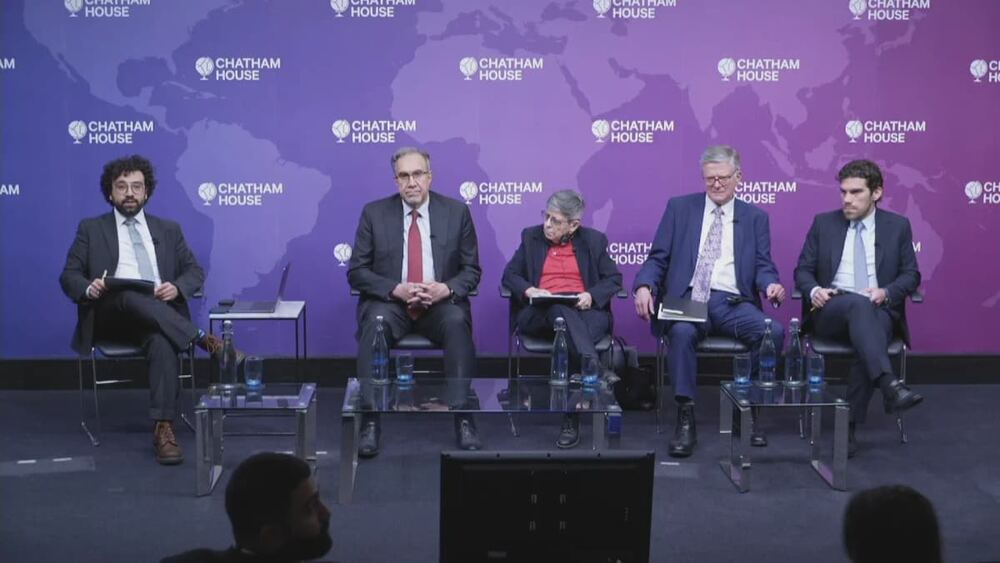
Political Impact of Street Protests in Iraq Discussed at Chatham House Panel
The UK‑based Chatham House hosted a panel assessing the ability of social pressure in Iraq to alter political decisions.
The UK‑based think‑tank Chatham House, in a closed‑door panel that included a former minister, international experts and civil‑society activists, put the question of whether social pressure in Iraq still has the power to change political decisions on the table. The session was opened by Chatham House researcher Haydar al‑Shakiri, who conducted a preliminary poll of the participants; about half of those surveyed said they believe street demonstrations can drive change, while the other half felt the impact would remain limited.
Iraqi Women’s Network President and human‑rights advocate Hana Edwar, citing the October 2019 protests as an example, emphasized that the movement was a peaceful popular uprising against sectarianism, corruption, lawlessness and uncontrolled weapons. Edwar noted that more than 700 young people lost their lives during the protests and that the perpetrators have still not been held accountable, stating that demands such as “the weapon should be under state control only” and “combating corruption” have even today been incorporated into opposition parties’ programmes. She also warned that activist assassinations, the Yanar Muhammed murder, the planned amendments to the Personal Status Law, and the incapacitation of the Iraqi High Commission for Human Rights are narrowing fundamental rights and freedoms.
Former Iraqi Minister of Electricity Dr. Luey el‑Hatib argued that Iraq’s democracy is chaotic and that profound transformations will take decades. Questioning whether the Tishrin movement still exists as an organized revolution, el‑Hatib said that quick results cannot be expected, and that deep structural changes require a long‑term process.
Source: Rûdaw