
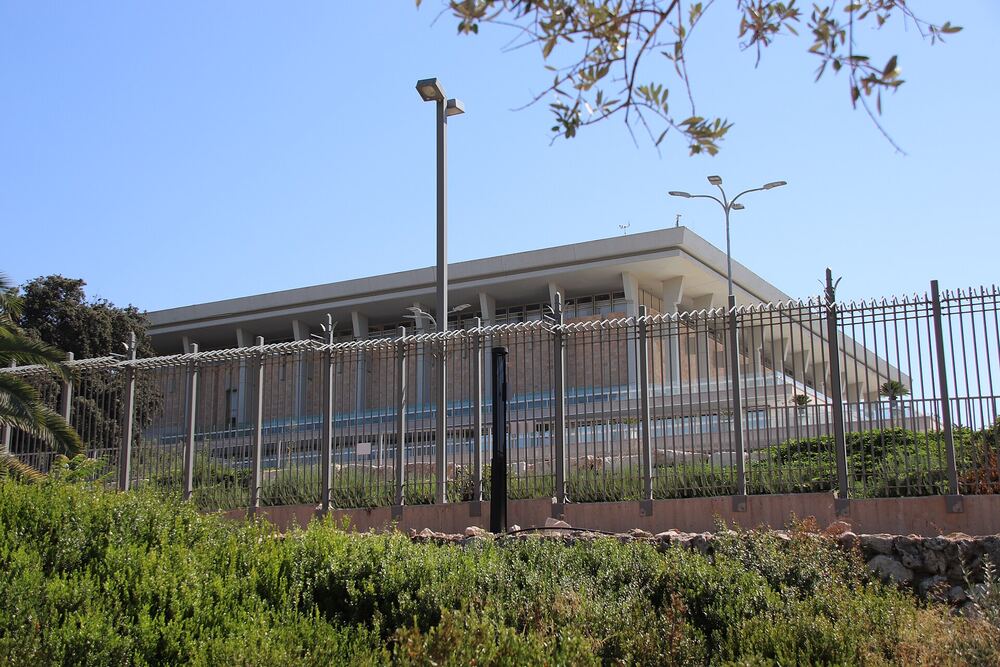
Israel election: Likud leads in exit polls, no bloc reaches majority
With turnout at 77.7%, the highest since 1999, none of the five exit polls gives either Netanyahu or Eisenkot 61 seats; Arab parties are in a decisive position.
Israel went to the polls on 27 October 2026 to determine the 26th Knesset. After the polls closed, none of the five exit polls released gave either Prime Minister Benjamin Netanyahu's bloc or the opposition the 61 seats needed to form a government.
According to data released by the Central Election Committee, turnout was 77.7%. This is the highest rate since 1999. About 5.7 million voters cast ballots. At 18:00, turnout had reached 66.7%; this was the highest level observed at that hour since 1973.
What do the exit polls say?
In all exit polls from Channel 11, Channel 12, Channel 13, i24 and Channel 14, the most seats go to Netanyahu's Likud party. Former Chief of Staff Gadi Eisenkot's Yashar! party is second. Likud is projected to win between 24 and 30 seats, Yashar! between 19 and 23.
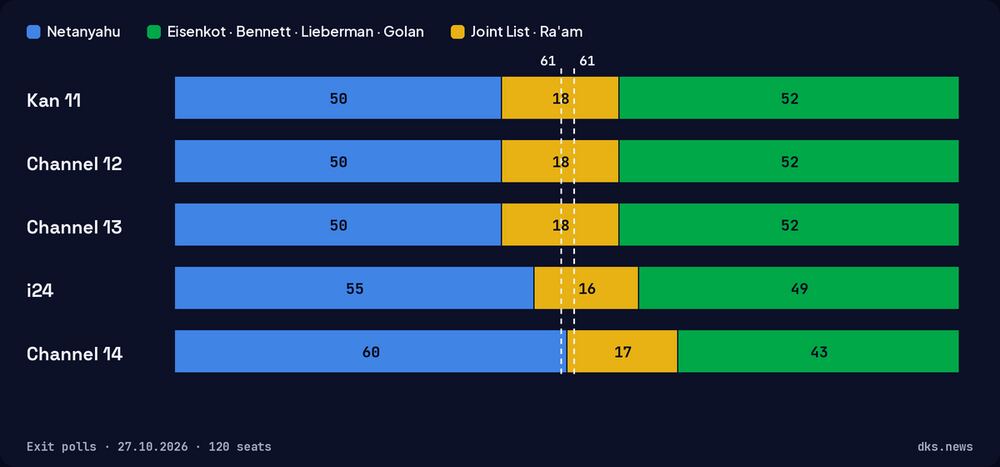
In the polls of Channel 11, Channel 12 and Channel 13 the picture is the same: Netanyahu’s bloc stays at 50 seats, the opposition bloc led by Eisenkot remains at 52 seats. Arab parties together with the United List and Ra’am take a total of 18 seats. i24’s poll gives Netanyahu’s bloc 55 seats, Channel 14’s poll gives 60 seats. Even according to Channel 14, Netanyahu’s bloc falls short of a majority by one seat.
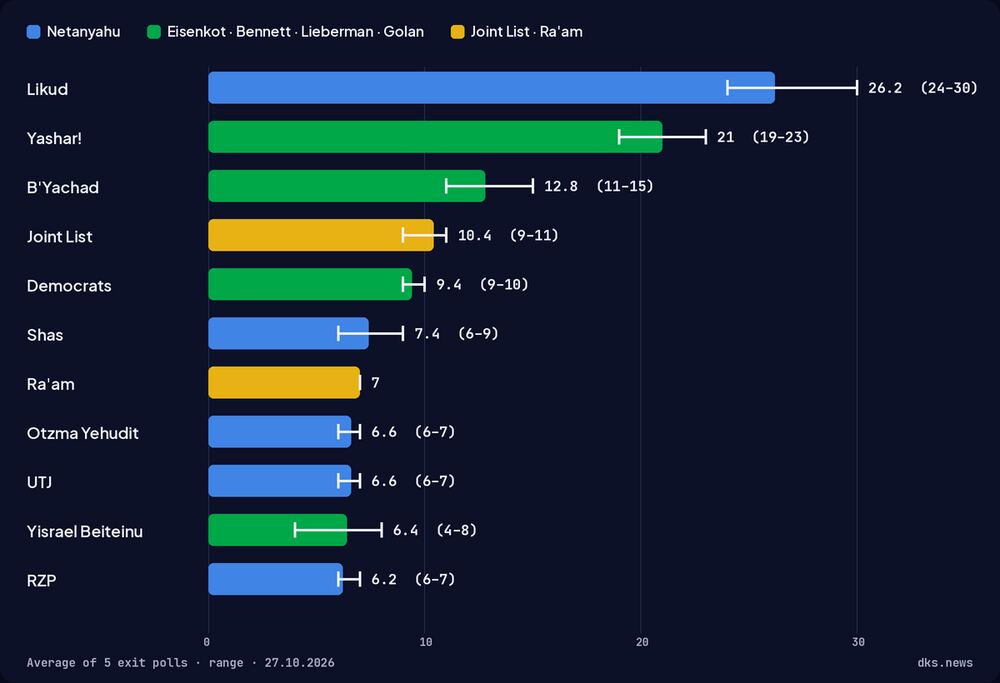
On the opposition side, former Prime Minister Naftali Bennett’s B’Yachad list is projected at 11‑15 seats, Yair Golan’s Democratic Party at 9‑10 seats, Avigdor Liberman’s Yisrael Beiteinu party between 4 and 8 seats. Netanyahu’s partners Shas, United Torah Judaism, Itamar Ben‑Gvir’s Otzma Yehudit and Bezalel Smotrich’s Religious Zionist Party are each estimated at 6‑9 seats.
Arab parties in a decisive position
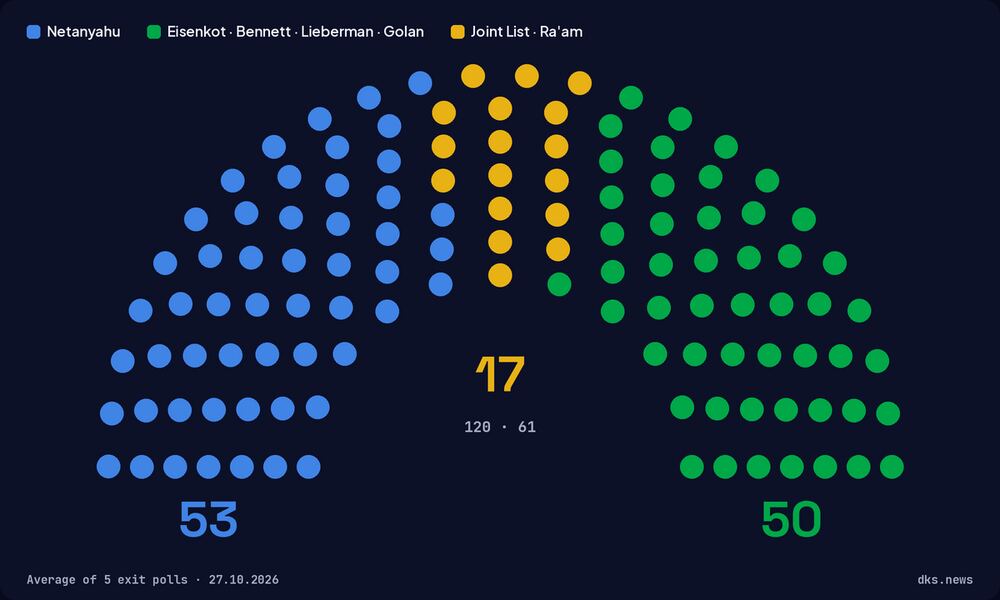
According to the polls, both blocs fell short of 61 seats, making the 16 to 18 seats projected for Arab parties crucial. However, both Netanyahu and the opposition bloc ruled out forming a government with Arab parties throughout the election campaign.
What was the election a vote on?
The election was largely seen as a public vote on Netanyahu’s leadership. The main issues of the campaign were: the investigation of decisions made in the lead‑up to the October 7, 2023 attack, the exemption of ultra‑Orthodox men from military service, the government’s attempts to reform the judiciary, Netanyahu’s corruption case, and Israel’s wars in Gaza, Iran, Lebanon and Yemen.
Gadi Eisenkot entered politics in 2022. After the October 7 attack he joined Netanyahu’s war cabinet; after losing his son in the fighting, he left the cabinet in 2024.
What comes next?
Exit polls are only estimates and the actual results may sometimes differ from these estimates. The polls were updated several times throughout the night; the parties' seat projections fluctuated by one or two seats. The final vote count is expected to be completed by October 30, with the official results to be announced on November 4. Parties need to surpass a 3.25 % threshold to enter the Knesset.
After the results, President Isaac Herzog will meet with party leaders and assign the task of forming a government to the strongest candidate. The designated candidate must gather the support of at least 61 of the 120 Knesset members within 42 days. If a government cannot be formed, the current administration led by Likud will continue in a caretaker capacity and new elections will be called in the coming months.
Sources: Channel 11, Channel 12, Channel 13, i24 and Channel 14 exit polls (compiled by Israel Hayom), Israeli Central Election Committee (via NBC News), Time, CNN. Cover photo: Knesset building, Jerusalem. Gary Todd / Wikimedia Commons (CC0, public domain).