
Displaced Residents of Sinjar Demand Compensation and Reconstruction Support from Iraq's Government
More than 30,000 families are still living in camps twelve years later, and the compensation and rebuilding budget has yet to be implemented, officials say.
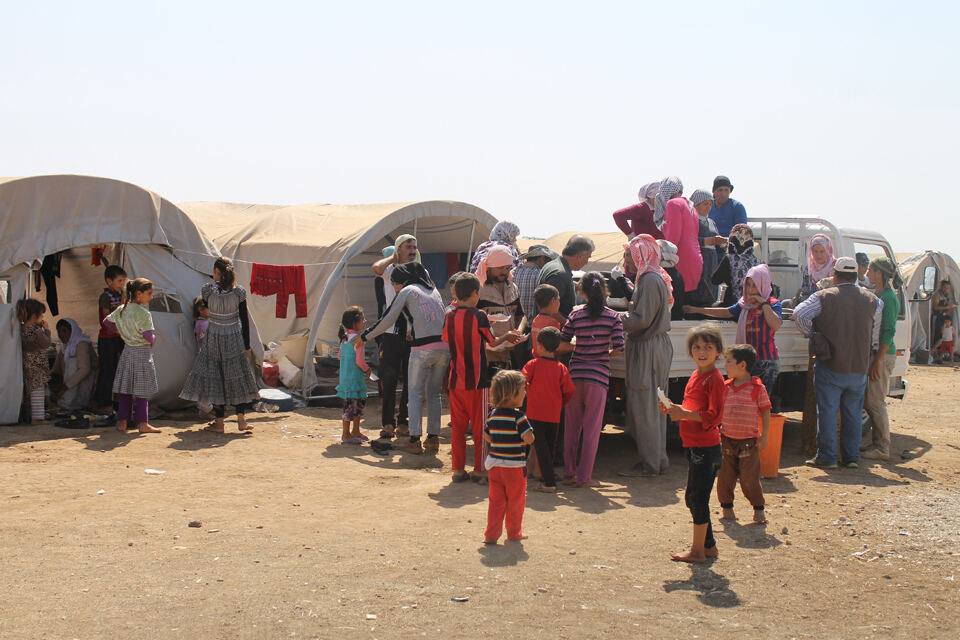
Twelve years after the Sinjar disaster, more than 30,000 families are still residing in camps, and the vast majority have not yet received damage compensation. The displaced families are awaiting the Baghdad administration's implementation of reconstruction and compensation measures to enable their return.
Babê Tayır Şengali, a Sinjar displaced person living in the camps, said his home had been destroyed and that living conditions no longer exist in the area, adding, “We want the allocated payment to be made before we return, because no one can go back to a demolished house.” Süfyan Yusuf, the head of the Sinjar office of the Kurdistan Regional Government’s Ministry of Regional Affairs, noted that, according to data approved by the Iraqi Parliament, the destruction rate in the area is 85 % and that more than 80 % of the displaced Sinjar residents have homes that are not habitable.
Iraqi Prime Minister Ali Zeydi announced in a meeting with members of parliament and the Ninova Provincial Council that a budget of 100 billion dinars has been allocated for the reconstruction of Sinjar and for compensation, but that the decision has not yet been implemented. Halid Seydo, the Yazidi quota MP in the Iraqi Parliament, said the allocated budget will be distributed as a 4 million‑dinar return assistance and damage compensation package, that the community has so far received only 5‑10 percent of the compensation they are owed, and that with the 100 billion‑dinar budget the share could rise to 50‑60 percent and resettlement could begin.
After the attacks by the terrorist group ISIS, more than 80 percent of Sinjar’s economic infrastructure was destroyed, and although 49,000 families have completed their compensation procedures, they are still awaiting payment. Rebuilding the entire district is estimated to require 10 trillion dinars.
Source: Kurdistan24