
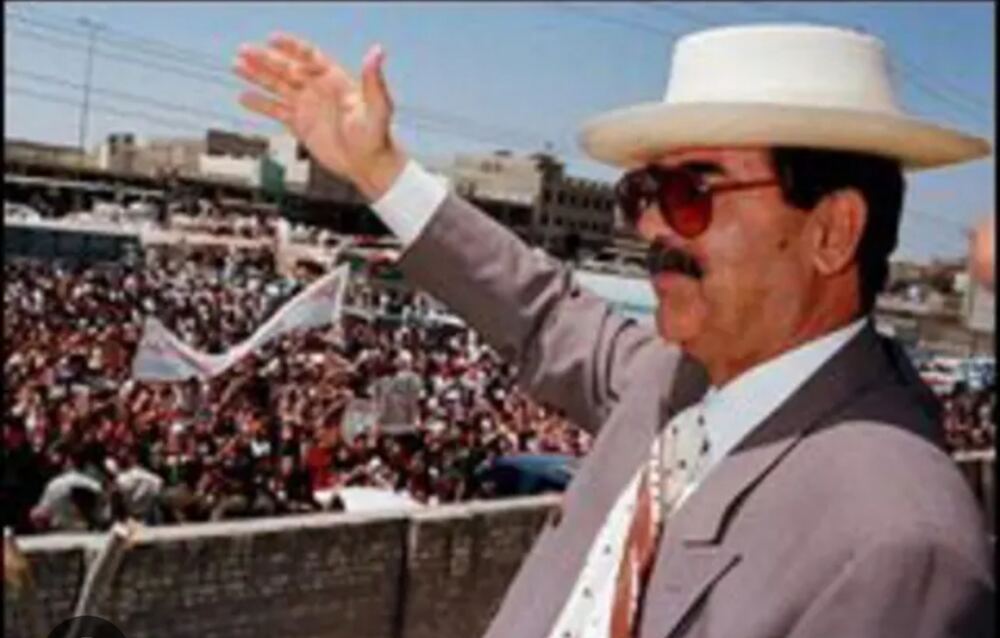
The Winner Takes All
The Shiites whom Saddam would not even allow to weep became, once in power, the sternest champions of "unity and integrity". A political culture that runs from a CIA analyst's interrogation of Saddam to today's Syria: the winner takes all.
The late Jalal Talabani once said: "Saddam's regime was killing us Kurds and the Shiites, but it would not even let the Shiites weep." He was trying to explain that what was done to the Shiites was worse still. No one heard the Kurds, but the Shiites were not heard at all.
After the United States toppled Saddam's regime, those same Shiites came to power and filled the entire vacuum. Had the US foreseen this? Of course it had. In those critical days when Saddam's regime fell, what worried Bush most, and what he was briefed on again and again in the Oval Office, was how the Sadr group would position itself. Sadr was Bush's nightmare in those days. It is the story of days when a pebble could hold up a boulder at the critical moment...
How do we know this? From "Debriefing the President", the book by John Nixon, the CIA analyst who interrogated Saddam. The president he means is Saddam Hussein; Nixon is the analyst who questioned him on the CIA's behalf. Reading the book, I came to see the CIA as a third-rate intelligence agency within the United States. Its people did not even know that Saddam had been captured.
John Nixon called his interviews an "interrogation". Because he fell short, Saddam Hussein even managed to win him over. From these interviews he describes as "interrogation", I drew a few striking conclusions. Nixon says that whenever he backed Saddam into a corner, Saddam would start telling him about Saladin. In the end he tires of it, bothered that Saddam talks as if he did not know Saladin was a Kurd.
I was going to say that Saddam, the enemy of the Kurds, boasts of a Kurdish leader, but what is truly striking is something else: in this interrogation Saddam tells Nixon that he loves the Kurds dearly, that he did not order the Halabja massacre and that he was even furious about it, and this astonishes John Nixon.
In his book, Nixon writes that the KDP and the PUK came to believe in the reality of an independent Kurdistan only after the September 11 attacks. Isn't it striking that these two parties, which Nixon says fought each other almost as much as they fought Saddam, were won over to this line only after 9/11? So were they fighting "for a cause they did not believe in"!?
The Shiites who were not even allowed to weep become, once in power, stricter champions of "unity and integrity" than Saddam ever was. John Nixon explains why: the political culture of the Middle East, where "the winner takes all"...
Syria's HTS has confirmed this culture. Brought to power, HTS has applied the politics of "the winner takes all" to the letter. Just as the Shiites did when they came to power after Saddam fell, the logic of "the winner takes all" has been put to work in Syria too. With one difference: this time at the hands of the United States!