
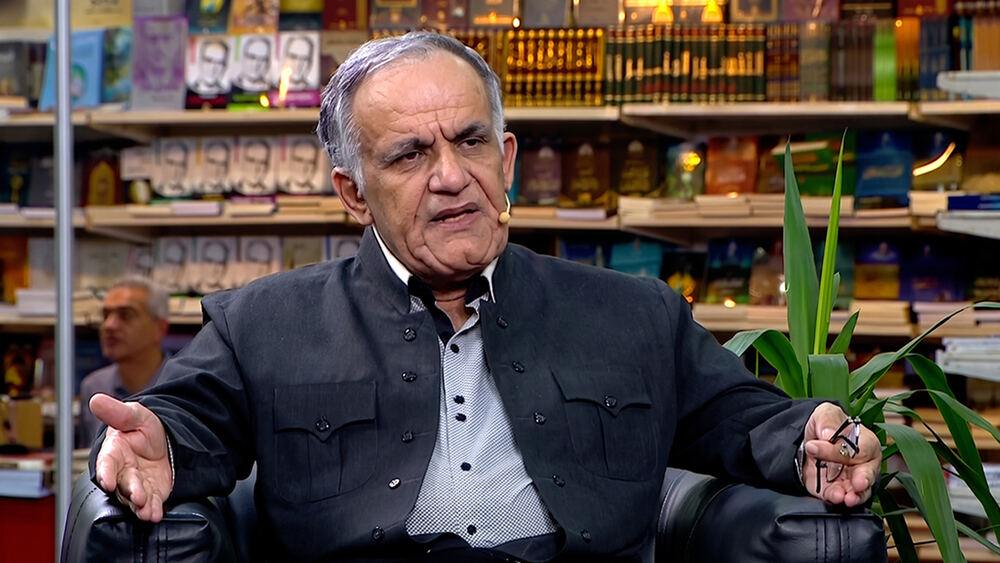
Kurdish historian Necati Abdullah: Digital National Library will ensure cultural unity
Necati Abdullah emphasized the establishment of a cloud‑based Digital National Library as a vital necessity to unite the fragmented writing of Kurdish history.
Speaking to Kurdistan24 during the Erbil International Book Fair, historian and former president of the Kurdish Academy Dr. Necati Abdullah said that the geography of Kurdish historiography is as fragmented as its territory. He noted that modern Kurdish history only began in 1925, was interrupted by censorship and bans between 1925‑1991, and reached a golden age with the 1991 uprising (Raperin).
Abdullah stressed that the only unifying factor for the Kurdish people, divided across several countries, is their shared culture and language, and that digitalisation offers a crucial opportunity to achieve this unity. He said that state borders cannot block communication in the virtual world, and that there is an urgent need for a cloud‑based “Digital National Library” that would bring together Kurdish manuscripts and sources worldwide. He called the fact that the project has not yet been implemented a major neglect.
The historian argued that the notes of foreign missionaries, diplomats and travelers represent “the view of the other” and should be re‑examined through a critical filter by Kurdish historians. He also addressed the AI revolution, describing the technology as a “train that cannot be stopped,” and said that instead of becoming slaves to artificial intelligence, it should be steered to serve scientific and national goals; for this, he suggested establishing specialized universities or institutes in the Kurdistan Region.
Necati Abdullah was born in Erbil in 1966. After completing his bachelor’s and master’s studies, he earned a Ph.D. in modern history at Paris‑X University in France in 2006; his dissertation examined the Ottoman‑Iran border disputes, as well as the balance of power among Kurdistan and the tribes, between 1843 and 1932. He has served as secretary of the Kurdish Academy and as editor‑in‑chief of several academic journals, and is fluent in French and Kurdish.
Source: Kurdistan24