
Reaction to Louis Vuitton's Kulebal: Why is Kurdish heritage invisible on the runway?
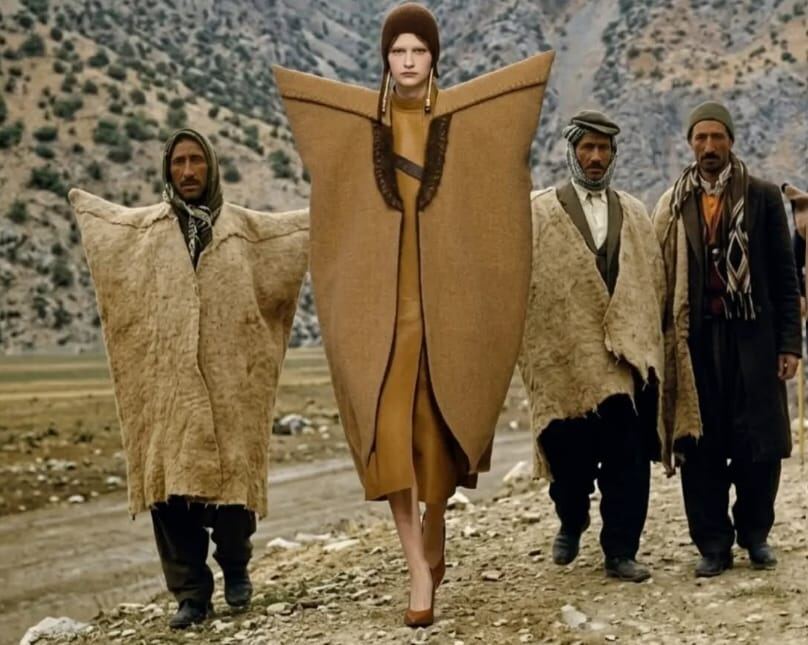
Louis Vuitton's 2026 Fall/Winter collection featured shepherd capes labeled as “Turkish kepeneği,” sparking a debate over the traditional Kurdish Kulebal from Hawraman appearing on the runway: why is Kurdish cultural heritage presented without acknowledgement?
The suede‑like shepherd capes shown in Louis Vuitton's 2026 Fall/Winter collection were described in the fashion world as “Turkish kepeneği.” However, the designs bear striking resemblances to the Kurdish Kulebal tradition, reviving the debate over cultural heritage.
The French luxury fashion giant Louis Vuitton presented its Nicolas Ghesquière‑signed 2026 Fall/Winter women’s collection in Paris on March 10, 2026. The collection featured roomy, hooded, suede‑like shepherd capes that drew attention.
Vogue described the pieces as “Turkish kepeneks.” Yet in Kurdish culture, the traditional garment called Kulebal, especially used in the Hawraman/Hewreman region, shares significant similarities with the designs.
Kulebal is documented as a traditional Kurdish garment made from sheep and goat wool, designed to protect against the harsh mountain climate. Cultural‑heritage studies on Kurdish sheepherding also reveal that shepherd clothing made of goat wool has been produced in the Zagros region.
Therefore, the debate is not limited to the aesthetic appearance of a single piece of clothing.
The question is: when a garment similar to one that has been produced and worn in Kurdish regions for centuries is reinterpreted on the global luxury fashion stage, why is the name of Kurdish culture not mentioned?
There is currently no publicly available document proving that Louis Vuitton's design was directly copied from Kulebal. However, it is documented that Kulebal is part of Kurdish cultural heritage and that traditional shepherd clothing made of goat leather is produced in the region.
This brings the debate over cultural appropriation.
It is possible for global fashion to reinterpret a culture's aesthetic elements. Yet the question of which communities the heritage belongs to and who has preserved it from generation to generation is equally important.
Kulebal is not merely a garment; it is a cultural heritage linked to the geography of Hawraman, wool craftsmanship, goat‑leather expertise, and the artisanal traditions passed down through Kurdish communities.
Therefore, the Kurdish demand is not simply “this garment is ours.”
The demand is for the cultural source to be made visible:
Recognize it. Cite the source. Mention the name of Kurdish culture. Do not make cultural heritage invisible.
A clearer statement from Louis Vuitton about which traditions these designs were inspired by would be an important next step in the debate.
#Kulebal #KurdishCulture #KurdishHeritage #Kurdistan #KurdishCraftsmanship #LouisVuitton #CulturalHeritage #CulturalAppropriation