
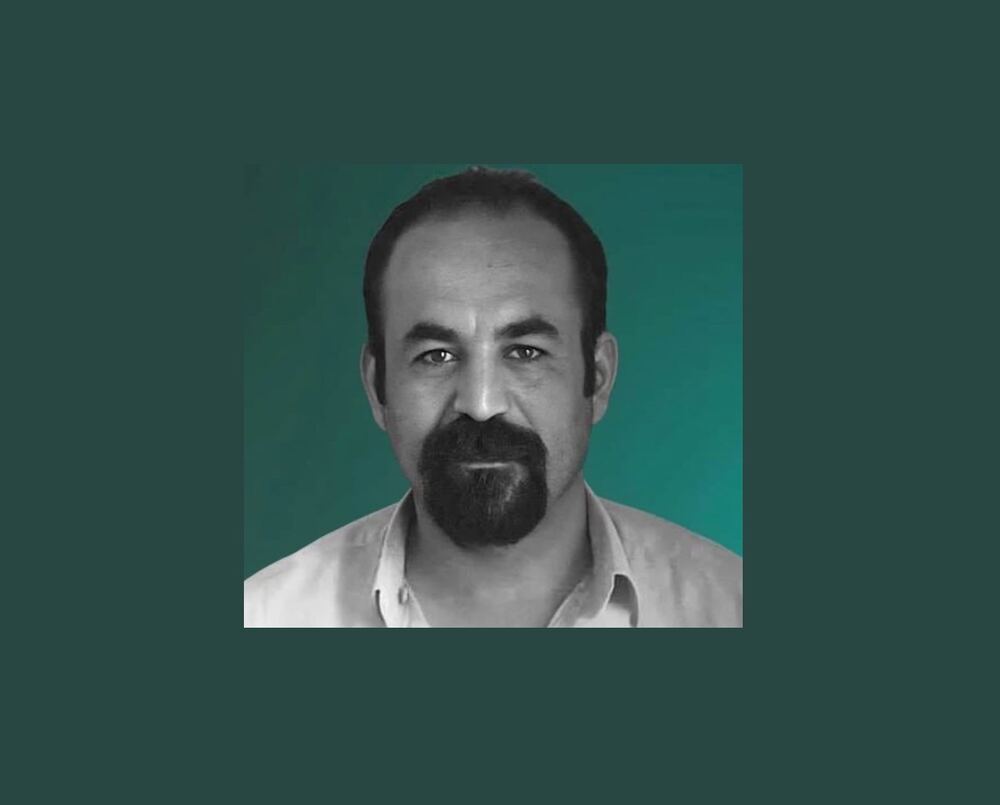
Which Cause Did Öcalan Betray?
Öcalan’s “cause” was never the freedom of Kurdistan but the survival of the state; today, with the dissolution of the PKK, his former comrades, Kemalists and the new ruling coalition sit at the same table, only the actors have changed, the state's Kurdistan policy remains the same.
Today, with the PKK having dissolved itself and the withdrawal timetable from Kandil in effect, it is necessary to revisit the assessment I made years ago about Öcalan: “He has abandoned his old comrades. In the organization’s jargon, he has betrayed the cause!”; because that assessment has been loaded with completely wrong interpretations. It appears that the picture of Öcalan and the PKK has not yet taken its proper place even in the minds of many PKK‑opposing Kurds. I had thought, based on the belief that “the picture is now clear and has entered public consciousness,” that there would be no need to explain the terms “old comrades” and “cause.” I was wrong.
Let’s repeat: the PKK is a counter organization established by the Turkish state, tasked with ending anti‑colonial dynamics in Kurdistan and integrating the Kurdish people into the colonial system. This organization, alien and hostile to Kurdish history, Kurdish culture, Kurdish symbols and values—in short, to the Kurdish nation—has been imposed on the Kurdish nation by force and intrigue. The PKK is a Special Warfare Department organization launched with a well‑trained core cadre and a well‑planned division of labor, continuously supported by new cadres as it grows. The Special Warfare Department was at one time referred to as Ergenekon. However, I doubt that Ergenekon encompassed the Special Warfare Department; therefore, even though the name has changed, I will use its former name. One of the PKK’s characteristic features is its sworn hostility to Kurds and Kurdistan; the other is its sworn Kemalism.
Thus It is not the Kurdish and Kurdistan cause that should be understood from Öcalan's "case"; but rather the case that the “Kemalist Republic will remain eternally” and that the colonial status of Kurdistan will continue forever. Öcalan and his comrades have been choking the dynamics of Kurdistan’s freedom in dark corridors for decades in the name of this case. Even during the Third Partition War, a period when the Middle East was being reshaped and a new phase began with a war against Iran, they continued to fight to keep Kurdistan in a colonial condition.
What happened is that in the process that began in 2013, Öcalan went his separate way from his former comrades. Of course, the reason for this split was not differences in Kurdish or Kurdistan politics. The reason for the split was the new position taken in the power struggle within the Turkish state. In this internal conflict, many people were killed, including a president, numerous generals, officers, members of the MIT (National Intelligence Organization), police officers, and civilians; many state officials were also forced to change sides. The Special Warfare Department, of which Öcalan was also a member and which is composed entirely of Kemalist cadres, serves as the organizing and management hub for many dirty networks and various groups such as “Kurdish,” “Marxist,” “left,” “nationalist,” “Islamic,” etc. This structure was a party to the aforementioned internal state conflict.
Since the founding of the Republic of Turkey, the Kemalist organization that claims ownership of this “Republic” and sets the state’s core policies—especially the Kurdistan policy—had been badly bruised by the Ergenekon and Balyoz arrests, which were launched under the pretext of coup plans and attempts to topple the AKP government, causing it to lose important positions. The organization was going through hard times; its members were being tried with heavy sentences ranging from 15 to 20 years. Nevertheless, the organization shut its doors to the reconciliation efforts pursued by the AKP‑MİT‑police team under the threat of severe punishment, and continued to consolidate the Kemalist front by using all the tools at its disposal and a governing capacity approaching a century. The most important of these tools was the “Kurd Party PKK”.
: Here is Öcalan, in such a difficult period, who started intensive work on the front lines of the AKP‑MİT‑police team he labels "fascist", after abandoning his organization that had made him a "leader" and "god" to the Kurds and its Kemalist ideals, in order to encircle the Kurdish national liberation struggle from within. If we are to speak of Öcalan's "betrayal of the cause", what is meant is his turning his back on Kemalist ideals.***
However, this betrayal did not last long, because the conflict within the state was not permanent either. After parting ways with its former allies in 2013, the ruling coalition reconciled with the Kemalist officers it had previously prosecuted for plotting a coup. The Balyoz defendants were acquitted in 2015, and the Ergenekon defendants in 2019, as the court found insufficient evidence of the organization’s existence. Following the July 15, 2016 coup attempt, the Special Warfare Department’s Kemalist officers and the Turkish‑Islamist government met on the same side of the state. This time, the nationalist wing of the state opened the door to a new era. MHP leader Devlet Bahçeli, on October 22, 2024, invited Öcalan to come to parliament and announce the dissolution of the organization, and in return raised the issue of a “right to hope.” In February 2025, Öcalan called on the group to lay down its arms. The PKK announced its self‑dissolution in May 2025, and in July 2025 the first weapons were ceremonially burned near Silêmanî. A parliamentary commission presented its report in February 2026, and the framework law governing the PKK’s liquidation entered into force in August 2026.
Thus Öcalan’s former comrades, from whom he had once separated, and the Kemalist front he turned his back on, met again at the same table. The task set at the founding of the PKK – to end anti‑colonial dynamics in Kurdistan and integrate the Kurdish people into the colonial system – is today being pursued as a joint project of all branches of the state.
Although the legal framework grants him neither a right to hope nor a special status, the “leader” and “god” figure of Öcalan is effectively protected. He has had no difficulty adapting to the new Turkish‑Islamist and nationalist colleagues who organize the continuation of anti‑Kurdish and anti‑Kurdistan sentiment, his former mission. After all, there is a principle known and applied by all civil servants:
Continuity in state affairs is essential!