
Iron Age and Parthian‑Sasanian Remains Found in 2,800‑Year‑Old Cemetery in Sine
Excavations at the Zagros Cemetery in Sine have uncovered Iron Age graves dating to 750‑500 BC and architectural remains from the Parthian‑Sasanian period.
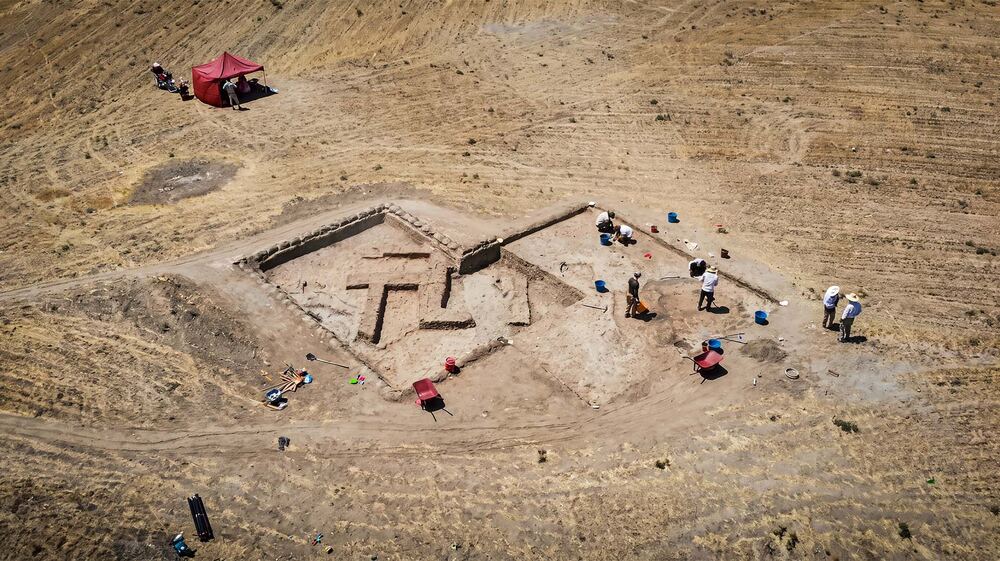
In the eastern region, at the Zagros Cemetery located on the slopes of Mount Abider in the southwest of the town of Sine, ongoing excavations have uncovered a large number of graves and archaeological artifacts dating back roughly 2,800 years.
In the second phase of the dig, led by archaeologists from Hamadan University, graves from the Iron Age III period (750‑500 BC), human remains, and architectural structures and artifacts from the Parthian and Sasanian eras were brought to light. Professor Kazim Melazade of the Department of Archaeology at Hamadan Bu‑Ali Sina University said that excavations are being carried out at five separate locations and that the work is ongoing.
Analyses of the recovered human remains and burial practices indicate that the population of the period adhered to Mithraism and sun‑worship, burying their dead with faces turned toward the sun.
The cemetery was first discovered by accident in 2008 during road construction near Mount Abider, and a few months later the first phase of excavations began. The second phase has now been underway for three weeks, with plans to continue for another week. Residents of Sine are urging authorities to establish a dedicated museum on the site to preserve the historic heritage.
Source: Kurdistan24