
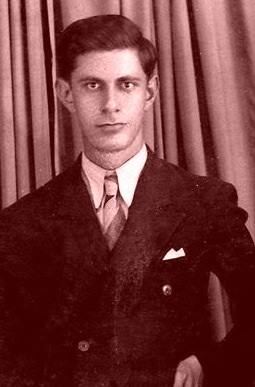
National Anthem – Oh Rival
Ey Reqîb, written by Dildar, is not just a national anthem; it is a powerful national heritage that carries the Kurdish people's historical memory, will for freedom, identity and nation‑building struggle from generation to generation.
Kurdish history must be built upon ideas such as Kurdish national thought. Otherwise, the perpetual quest for truth either weakens, propels forward, or destroys national thought and internal national strengthening. Our national values are crucial in this regard. Numerous articles have previously been written about our national anthem, including those in various forms and the book authored by Yunus Rauf himself. There is no objection to repeating and updating this discourse; indeed, it is a great need for it to be etched into memory.
For this reason, we have decided to revisit the article once more, focusing on Yunus Rauf‑Dildar (20 February 1918 / 12 November 1948), the composition process of our National Anthem, its history, appropriation, the role of national thought and nation‑building, and the importance of national values in the formation of identity.
Beyond a few fundamental traits that make a people a nation, its inclusive and profound spirit can only be forged through a strong sense of ownership. This can first be seen as taking ownership of the nation's history. In addition, historical figures, geography, and the spirit of national unity also matter. However, what truly defines a nation is its own borders, its flag, its national anthem, the internal acceptance, inner strength, and inner thought.
The origin of our “ala” color, as is known, emerged almost simultaneously with the nation‑building process. In the same way, our national anthem – Ey Reqib – was created in a distinct period of ownership.
Now, once again, it is vital for peoples like ours to fiercely protect the fundamental elements that shape these national symbols and the ideological system, to understand what that means, and to make that protection a continuous practice.
The Ey Reqib anthem, as a beautiful national song, reflects our history, culture, geography, and customs very well.
Now we need to revisit the anthem’s creation process, its author, its acceptance, and the history embedded within it.
Ey Reqib is also an epic of Kurdish history and culture.
Başur, Koysancak, born on 20 February 1918, is a national poet. He received his primary education in Ranya and attended middle school in Hewler (Erbil) in 1935. He completed high school in Kirkuk and pursued law studies at the University of Baghdad. He combined literary work with a legal career after law school. He is deeply interested in literature and history and continues to write poetry. Known for his patriotic stance, he is recognized for justice and national advocacy on behalf of those in need. In his youth, he followed the verses of prominent national poets such as Heci Qadiri Koyi, Bekes, Piremerd, and Ebul Wefayi Kurdi. His interest in poetry began this way, and his first poem was published in the magazine Ronahi in 1935.
In 1937, while still only 19 years old, Mukarem Talabani, Mustafa Uzeri, Mustafa Neriman and Nuri Şawes founded the “Komelay Darkeri.” The organization’s goal was to free Kurdistan from occupation. The young activists wanted to bring a more experienced Kurdish figure to lead the existing movement, so they approached Refik Hilmi. Hilmi accepted their proposal on the condition that the group change its name from Komelay Darkeri to “Hizbi Hiwa.” Consequently, the “Umut Party,” which would play an important role in Eastern political life from 1939 to 1945, was established. Refik Hilmi became the party’s president, while Dildar served as Hiwa’s secretary. Hizbi Hiwa dissolved in the 1940s. Although Dizdar showed a left‑leaning orientation during these years, he did not join any party.
During this period he mainly published poetry in the journal Gelawej. He was less a representative of the classical school and more of the modern‑romantic poetic style. “Life is a great and precious opportunity. We must not waste it with sorrow and grief, because we can never get life back,” he wrote, expressing his attachment to a romantic view of existence. Dildar, who also wrote short stories, translated and published Kurdish versions of stories by French authors La Fontaine and La Marquise, reflecting his interest in French literature.
Our national march was composed under the leadership of Qadi Muhammad in 1946, the year the Republic of Mahabad was founded, and was adopted as the national anthem of the Kurdish Republic.
On 12 November 1948, Dildar felt a heart problem while watching the film “Saladin” at the Hemra Cinema in Erbil. Because he was taken to the hospital late and the doctors attended to him belatedly, he left us at a young age on 11 November 1948. It is also said that Dildar was poisoned. Even the last film he saw reflected the national poet’s patriotic spirit. Open to artistic and literary innovations, Dildar persistently continued his Kurdish national work.
O Rival
Oh rival, forever the Kurdish nation’s tongue
Oppression and gifts with the bullet of time.
No one will kill a Kurd, a Kurd will live.
They will live, never lowering the Kurdish flag.
We are the youths of red and of revolution
We ride the blood of our ancestors into the front.
No one will kill a Kurd, a Kurd will live.
They will live, never lowering the Kurdish flag.
We are the youths of Media and of the brave
Religion, faith and customs, every homeland.
Religion, faith and customs, Kurd and Kurdistan.
No one will kill a Kurd, a Kurd will live.
They will live, never lowering the Kurdish flag.
The Kurdish boy has risen on his foot like a lion
Until he reads, he will carve the crown of life.
No one will kill a Kurd, a Kurd will live.
They will live, never lowering the Kurdish flag.
The new youths are ready and prepared
Life is sacrificed, life is sacrificed, every life is sacrificed.
No one will kill a Kurd, a Kurd will live.
They will live, never lowering the Kurdish flag.
O Enemy
Listen, enemy, the Kurdish people are still alive, They will never surrender to artillery fire or disasters. Let no one say the Kurd is dead, the Kurd is alive, Alive, the Kurdish flag will never fall. We are the children of the revolution, clothed in red. Are you not afraid, O enemy, of our bloody past! Let no one say the Kurd is dead, the Kurd is alive, Alive, the Kurdish flag will never fall. We are the grandchildren of the Medes, of the Keyhushrevs. Kurdistan is forever our belief and our life, Let no one say the Kurd is dead, the Kurd is alive, Alive, the Kurdish flag will never fall. The Kurdish youth, with unshakable courage like a lion, Carves the crown of life with its blood. Let no one say the Kurd is dead, the Kurd is alive, Alive, the Kurdish flag will never fall. The Kurdish youth is ready and prepared, It is a sacrifice of the body, a sacrifice of the soul, a sacrifice. Let no one say the Kurd is dead, the Kurd is alive, Alive, the Kurdish flag will never fall
Dildar wrote the national anthem while in prison in 1938. “Ey Reqîb” means “O Enemy”. The poet addresses the guard in the Baghdad prison. He speaks to the wardens of the jail where Dildar was held and tortured, denouncing the oppression directed at the Kurds.
Our national poet does not have a single comprehensive work. He does have a volume containing Sorani and Kurmanji poems that was published by Avesta Publishing. Our national anthem was written in Sorani.
Note: Dildar – Yunis Rauf, Diwan/Ey Reqib, Avesta Publications.