
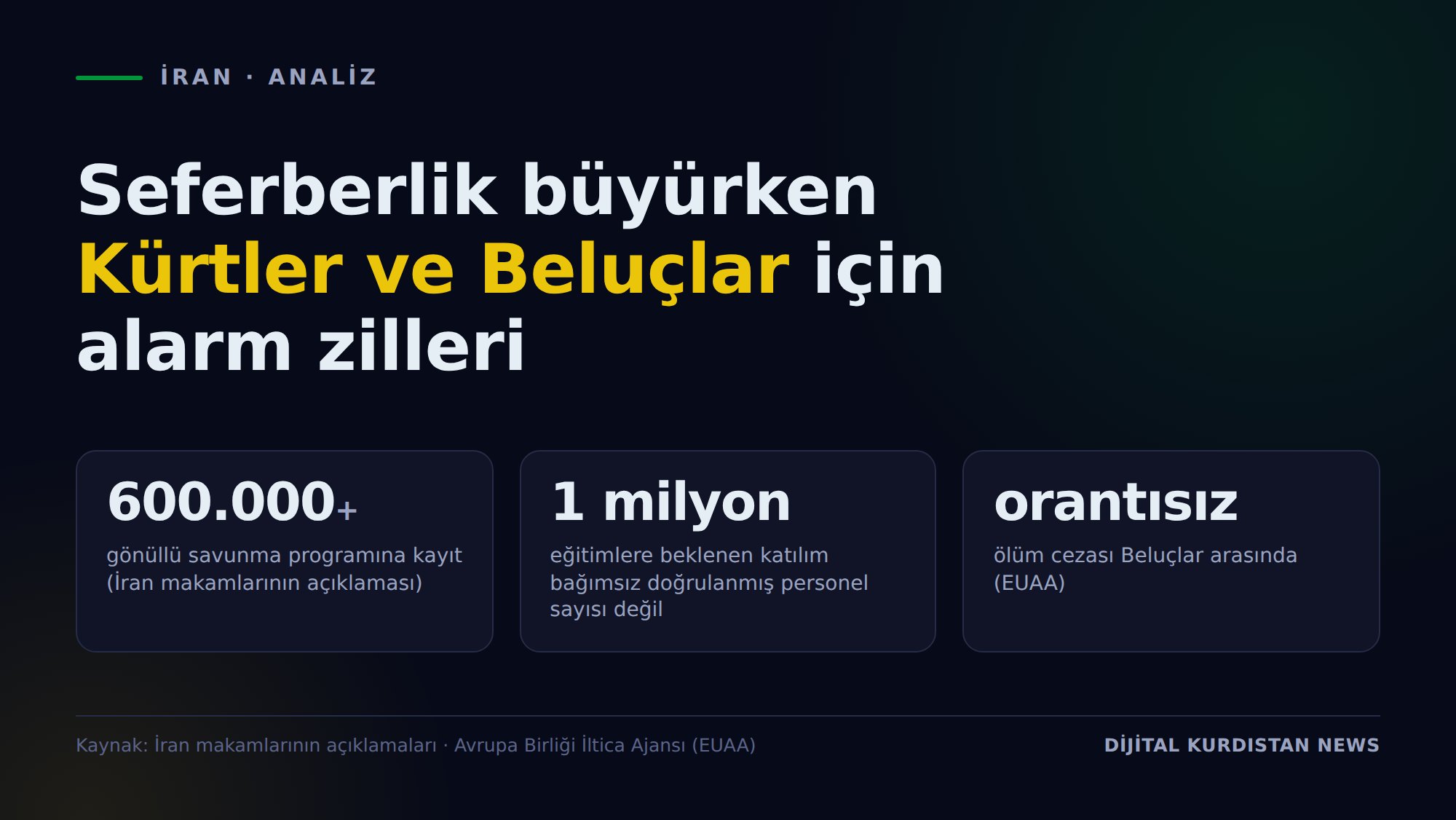
Alarm Bells for Kurds and Baluchis in Iran's Theocratic Death Republic
Registrations for Tehran's new volunteer mobilization force have exceeded 600,000. The European Union Agency for Asylum reports that Kurds and Baluchis can be targeted because of their identities and political activities.
TEHRAN — As the war conditions in Iran worsen, the Tehran administration's expansion of its new volunteer mobilization force has raised fresh concerns about the safety of the country's Kurdish and Baluchi populations.
Iranian authorities announced that more than 600,000 people have registered for the volunteer defence programme called “Janfada-ye Iran,” and that participation in the trainings is expected to exceed one million. The figures do not represent an independently verified count of military personnel. The new structure is described as an additional volunteer security capacity that will support the Revolutionary Guard and the Basij.
However, for Kurds and Baluchis the key question is how this mobilization will affect Iran's internal security policies.
The European Union Asylum Agency (EUAA) reports that Kurds and Baluchis can be targeted by Iranian authorities because of their political activities and identity, facing discrimination, detention, severe sentences and even execution. According to the EUAA, the death penalty is applied disproportionately, especially among the Baluchis; Kurdish political activities are also frequently assessed within the framework of national security and territorial integrity.
This situation heightens concerns that, as the conflict expands, security measures in Kurdish and Baluch regions could become harsher. However, at this stage there is no independently verified evidence that new volunteer units will be used specifically against Kurds or Baluchis.
Separating Kurdish and Baluch identity from membership in armed groups is of critical importance. Demands for cultural rights, political representation, mother‑tongue education and political status do not, by themselves, constitute armed activity.
The current situation in Iran shows that, under wartime conditions, not only military capacity but also the future of political and social rights is up for debate. For Kurds and Balochs, the core issue is whether security policies will further restrict the rights of civilians.
In the debate over Iran’s future, the political will, equal rights and security of its various peoples remain decisive issues.