
From the Utopia of the Ummah to Geopolitical Reality: Kurdish Political Thought, Historical Breakdowns and an Analysis of Southern Kurdistan
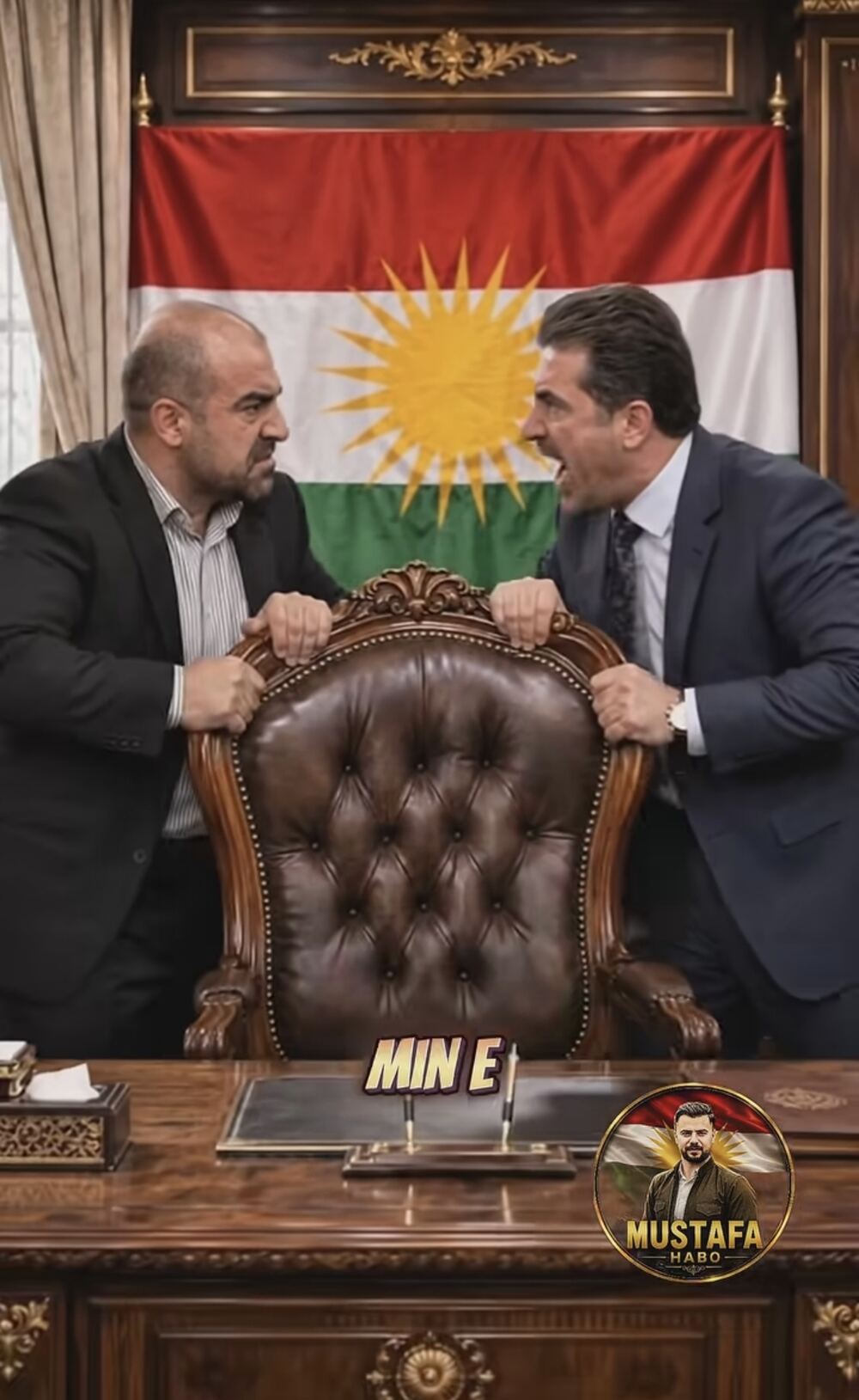
The future of a nation should be entrusted not to tribal power struggles but to common sense, national unity, institutional will, and the consciousness of self‑determination.
From the Utopia of the Ummah to Geopolitical Reality: Kurdish Political Thought, Historical Breakdowns and an Analysis of Southern Kurdistan
Throughout history, the Kurdish people—situated at the crossroads of great empires and possessing a rich cultural and strategic geography—have experienced a chronic vicious circle in their processes of political unity and institutionalization, placing them at the heart of one of the Middle East’s most complex issues.
The present state of a geography divided into four parts is not only the result of external interventions and imperialist map‑makers; it is also the outcome of a structural crisis generated by internal dynamics, tribalist reflexes, and historical narratives.
Examining the roots of this crisis from the early years of Islam to the current political upheavals in Southern Kurdistan, within a broad perspective, is essential for understanding the mechanisms behind the tragedies that have unfolded.
The Kurds' encounter with Islam dates back to a very early period, given their geographic location. Long before the Turks began a mass migration and integration into the Islamic world, the peoples of the region had already adopted this faith.
However, the madrasas and scholarly centers established there, unfortunately, served not to build a national political consciousness or a state‑building reflex, but became carriers of a universal ummah‑oriented vision and of the language and civilization building of other peoples.
Thousands of madrasas founded across the Kurdistan region taught the Arabic language’s grammar (morphology and syntax), literature, and juridical formation flawlessly; yet this accumulation delayed the institutionalization of Kurdish as an administrative, philosophical, and state language.
While the Arabs, by destroying religion in line with their tribal and national interests, turned it into twenty‑two states; the Persians, emerging from the Safavid Empire and the synthesis of Shiʿi Islam, brought forth a powerful nation‑state/empires onto the stage; and the Turks, in the course from the Seljuks to the Ottoman Empire, established more than a dozen states and empires, the Kurds have pursued an abstract and imagined utopia of the “ummah” concept.
This tradition of preferring to be loyal components of central empires rather than building institutional mechanisms (state, army, diplomatic reasoning) that would safeguard their own identity, territory and political existence has been the greatest dilemma of Kurdish political thought for centuries.
Indeed, even during the disintegration of the Ottoman Empire and at the critical juncture when the foundations of the Republic of Turkey were being laid, the persistence of this ummah‑oriented reflex prevented national rights from being anchored in a legal framework.
After World War I, the borders drawn on a ruler by an English strategist (Mark Sykes) and a French strategist (François Georges‑Picot) split the geography of Kurdistan into four pieces.
This division not only created physical borders but also severed the people's social, economic and cultural ties.
Throughout the century, struggles against this fragmentation were at times suppressed or failed to become lasting gains, due to leadership weaknesses, external powers' manipulations, or internal contradictions.
The greatest misfortune of the Kurds in modern history is that, instead of coalescing around a common strategic mind, they have fallen victim to periodic and conjunctural alliances.
At the present point, the most concrete administrative status among the four parts has been achieved in Southern Kurdistan (the Iraqi Kurdistan Regional Government) through the long‑standing efforts of two main tribes (the Barzani and Talabani lines).
However, the future of this autonomous structure is under great threat because of internal rivalries and tribal competition.
The independence referendum held in 2017 was a historic step in demonstrating the Kurdish people’s will for self‑determination.
However, as a result of joint moves by regional and global powers (pressure from neighboring states and the silence of the international community), many disputed territories—most notably the strategically important city of Kirkuk—returned to the control of the central government.
This defeat was not only the outcome of external intervention but also of internal disunity and the inability to develop a shared military‑political strategy against potential crises.
Today, the relentless power and sovereignty rivalry between these two tribes/parties is triggering a process that is about to turn the hard‑won autonomous structure into an emptied administrative unit and gradually reintegrate it into the Iraqi central state.
What is the cost of this competition for the Kurds?
If I were to underline the observation I tried to emphasize above in bold;
In the relentless competition between these two tribes, the Kurds will gain nothing. On the contrary: The regional actors (Baghdad, Ankara, Tehran) using these internal contradictions to their advantage will open the door to the complete nullification of Kurdish gains.
Energy spent on internal conflict leads to the disappearance of legal guarantees, institutional transparency and economic independence.
The blood shed, the suffering endured, and the costs paid over centuries in sacrifice to the narrow interests of two tribes will be the heaviest legacy left to future generations.
Faced with the fact that Arabs, Persians and Turks have turned their religious and geographic dynamics to their advantage and built states, what Kurds must do is not chase imaginary utopias but, on the basis of realpolitik, construct a rational, unifying and institutional strategy.
Putting an end to the current deadlocked disputes in Southern Kurdistan and ensuring internal peace and a common national strategy is a vital necessity.
If these two structures do not set aside their mutual conflicts of interest and unite around a shared Kurdish rationality, history will record this generation as responsible for past losses and missed opportunities.
Unless the Kurdish issue embraces a new political culture that transcends tribal boundaries, places merit at its core, and operates with the mindset of a modern state, the fate of the region will continue to be written in pain and loss. And that is that...