
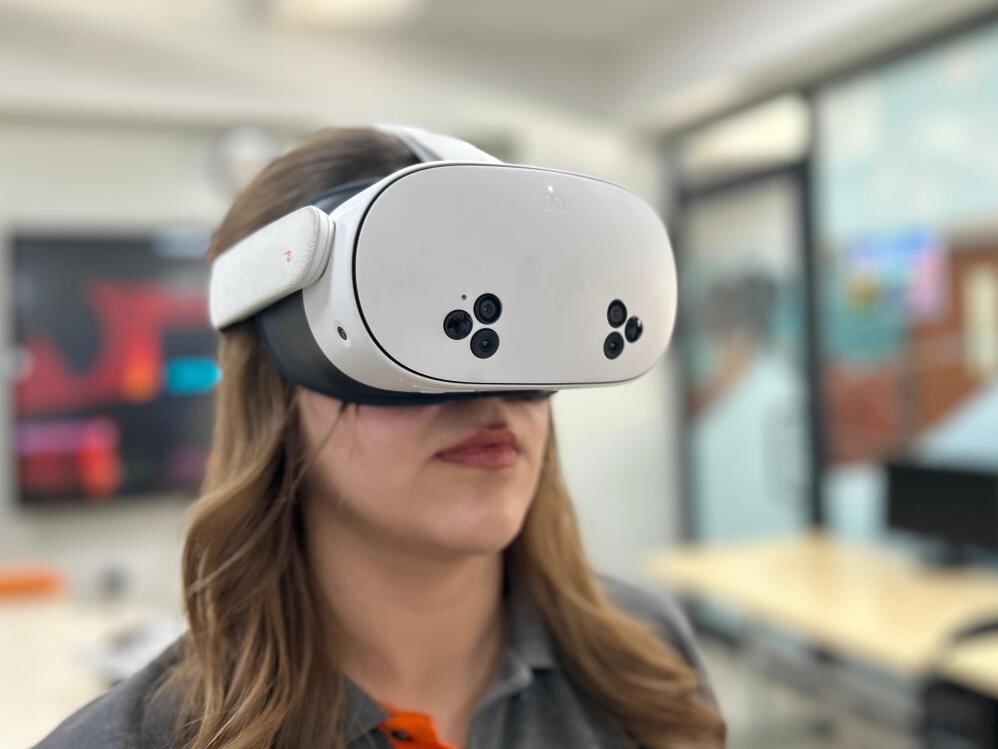
Classes Reshaped with Virtual Reality in Van
Van Teknokent College has integrated a VR-based education model into the curriculum under the Erasmus+ K210 project.
The VR-based education model launched in Van allows students to learn theoretical concepts through hands‑on experience in a virtual environment across subjects such as mathematics, physics, history and English. Scenarios designed to align with the curriculum outcomes of the Turkey Century Education Model enable exploration of topics ranging from space and the human body to historical events and scientific experiments.
Selected as one of six schools out of more than 2,000 applications nationwide under the Erasmus+ K210 project, Van Teknokent College incorporated the VR education system it developed after collaborations in Italy and Portugal into its school curriculum. The system aims to help students concretize abstract concepts across different subjects.
School principal Feyzi Karahan said the project's goal is to make curriculum outcomes clearer and more lasting. Scenarios are being prepared that take physics students to Mars or the Moon, place them inside a beating heart, or let them travel among sub‑atomic particles. In history classes, learners can step into past events and converse with the era’s protagonists; in English classes, they can hold conversations at A1, B1 and B2 levels with an artificial‑intelligence assistant in a virtual city. Karahan also emphasized that students can change a fuse without the risk of being electrocuted.
Source: Kurdistan24